Perspectives; Thoughts; Comments; Opinions; Discussions

Archive for the ‘War’ Category

ICE Arrests 11 Iranian Nationals, Including One Who ‘Reportedly Served as Iranian Army Sniper’ 


By: Virginia Allen | June 24, 2025

Read more at https://www.dailysignal.com/2025/06/24/ice-arrests-11-iranian-nationals-including-man-who-reportedly-served-iranian-army-sniper/

ICE officers, with assistance from Homeland Security Investigations and Border Patrol, perform enforcement operations in Delray Beach, Florida, on Jan. 23.
ICE officers, with assistance from Homeland Security Investigations and Border Patrol, perform enforcement operations in Delray Beach, Florida, on Jan. 23. (U.S. Immigration and Customs Enforcement Flickr)

U.S. Immigration and Customs Enforcement arrested 11 Iranian nationals over two days, the Department of Homeland Security announced Tuesday. Among those in custody is Ribvar Karimi, who “reportedly served as an Iranian army sniper from 2018 to 2021,” according to the DHS.  An Islamic Republic of Iran Army identification card was in Karimi’s possession when he was arrested in Locust, Alabama, on Sunday.  

Karimi entered the U.S. in October 2024 on a visa for foreigners who are engaged to be married to a U.S. citizen. But the DHS says he “never adjusted his status—a legal requirement—and is removable from the United States.” 

Karimi remains in ICE custody and is facing removal from the U.S. 

Ribvar Karimi

Under DHS Secretary Kristi Noem, the department “has been full throttle on identifying and arresting known or suspected terrorists and violent extremists that illegally entered this country, came in through [former President Joe Biden’s] fraudulent parole programs or otherwise,” DHS Assistant Secretary Tricia McLaughlin said in a statement.  

“We have been saying we are getting the worst of the worst out—and we are,” McLaughlin added. “We don’t wait until a military operation to execute. We proactively deliver on President [Donald] Trump’s mandate to secure the homeland.” 

In addition to Karimi, ICE arrested eight other Iranian nationals on Sunday and two more on Monday.

The arrests of the Iranian nationals come amid concerns of the possibility of the activation of Iranian terrorist sleeper cells in the U.S. in the wake of the U.S. attack on three Iranian nuclear sites Saturday.  

In Houston, ICE arrested Behzad Sepehrian Bahary Nejad, who entered the U.S. on a visa in 2016. He was arrested in 2017 for assaulting a family member, according to DHS, and in 2019, an immigration judge ordered his removal. A Department of Justice immigration judge denied his request for his case to be reopened. Nejad was said to be carrying a loaded pistol when ICE arrested him.  

Behzad Sepehrian Bahary Nejad

Hamid Reza Bayat was arrested in Houston despite having been ordered removed from the U.S. in 2005. According to DHS, he has twice been “convicted of drug crimes and once convicted of driving on a suspended license.”  

Hamid Reza Bayat

Mehrzad Asadi Eidivand entered the U.S. in 2012, and in 2013 a judge granted him voluntary removal from the U.S., but he never left. He is “convicted of threatening a law enforcement officer and being an alien in possession of a firearm,” according to DHS.  

Mehrzad Asadi Eidivand

Yousef Mehridehno was arrested in Gluckstadt, Mississippi. Mehridehno entered the U.S. legally in 2017, but the government terminated his residency after it was determined that he “lied on his original visa application and committed potential marriage fraud,” according to DHS. “In February, Mehridehno was listed as a known or suspected terrorist, and he’s now in ICE custody pending removal proceedings.”  

Yousef Mehridehno

Mahmoud Shafiei and Mehrdad Mehdipour were living together in Colorado Springs, Colo., at the time of their arrests. A judge ordered Shafiei removed from the U.S. in 1987 after he entered the U.S. in 1981.  Shafiei’s “criminal history includes state and federal convictions for drug crimes and arrests for assault and child abuse,” according to the DHS.  Mehdipour was processed for expedited removal in 2023.  

Mahmoud Shafiei

ICE arrested Mehran Makari Saheli in St. Paul, Minnesota. He is a “former member of the Islamic Revolutionary Guard Corps (IRGC) with admitted connections to Hezbollah,” according to DHS. He was ordered removed from the U.S. in 2022.  

Mehran Makari Saheli

Bahman Alizadeh Asfestani was arrested in San Francisco and has a criminal history, according to DHS, that includes “a 1994 conviction for petty theft and a 1995 conviction of possession of a controlled substance for sale.” 

freestar
Bahman Alizadeh Asfestani

On Monday, ICE Buffalo arrested Mohammad Rafikian who has been “convicted of grand larceny, schemes to defraud, criminal impersonation, and practicing as an attorney,” the DHS said.  

Also on Monday, ICE San Diego apprehended Arkavan Babk Moirokorli. He was convicted of forging an official seal. 

JUST IN: Trump’s Iran Decision Coming as Missiles Hit Israeli Hospital


By Jimmy Parker | June 19, 2025

Read more at https://pagetraveler.com/just-in-trumps-iran-decision-coming-as-missiles-hit-israeli-hospital/

President Donald Trump is expected to make a final decision within the next two weeks on whether the United States will enter the Israel-Iran conflict, following a devastating Iranian missile strike Thursday on Soroka Hospital in southern Israel. The attack, which injured more than 70 civilians, marks a turning point in the escalating conflict and raises urgent questions about Iran’s nuclear capabilities and intentions.

Iranian Missile Hits Civilian Hospital in Israel

Early Thursday morning, a barrage of Iranian missiles struck Soroka Medical Center in Beersheba, one of Israel’s largest trauma hospitals. According to Israeli officials, over 70 people were injured. Photos from the scene show thick plumes of smoke rising from the hospital complex.

Israeli Prime Minister Benjamin Netanyahu condemned the attack, calling it a direct strike on civilians and a war crime. Foreign Minister Gideon Sa’ar echoed the sentiment, stating, “Iran has intentionally targeted a civilian medical facility—this is a violation of international law and an act of terror.”

The Iranian regime has not formally acknowledged targeting the hospital, but the strike comes amid intensifying missile exchanges between Tehran and Jerusalem following Israel’s recent strikes on Iranian military sites, including facilities allegedly tied to Iran’s nuclear program.

Trump to Decide Within Two Weeks on U.S. Involvement

White House Press Secretary Karoline Leavitt addressed reporters Thursday afternoon, delivering a direct quote from President Trump:

“Based on the fact that there’s a substantial chance of negotiations that may or may not take place with Iran in the near future, I will make my decision whether or not to go within the next two weeks.”

Leavitt reiterated that President Trump remains open to diplomacy but emphasized his commitment to preventing Iran from acquiring nuclear weapons. “Iran went for 60 days without responding to our outreach,” she said. “On day 61, Israel took action. The president will now determine if the U.S. should follow suit.”

Leavitt also confirmed there have been six rounds of direct and indirect negotiations with Iran since the conflict reignited, but she declined to disclose details of the discussions.

U.S. Intelligence: Iran Weeks Away From Nuclear Weapon

Leavitt warned that Iran is closer than ever to acquiring a nuclear weapon. “Iran has all that it needs to achieve a nuclear weapon. All they need is a decision from the Supreme Leader. It would take just weeks to complete production.”

This estimate is consistent with recent reports from U.S. and Israeli intelligence, which suggest Iran has enriched uranium to near-weapons-grade levels and has the necessary delivery systems in place.

Trump has consistently stated he would not allow Iran to obtain a nuclear weapon, and his current deliberations include potential military action against Iranian enrichment and missile facilities. Reports indicate that bunker-buster bomb options are being reviewed among possible strike packages.

U.S. Evacuates Personnel, Israel Launches Counterstrikes

In response to the hospital attack and other Iranian strikes, the U.S. Embassy in Israel began evacuating nonessential personnel from high-risk zones, according to sources familiar with the operation.

Meanwhile, Israeli Defense Forces launched new airstrikes overnight, targeting Iranian surface-to-surface missile platforms and anti-aircraft units within Iranian territory. Israeli officials say these strikes are defensive and focused on degrading Iran’s offensive capabilities.

Internet Blackout Inside Iran

Amid growing unrest, Iran’s government has shut down internet access nationwide, cutting off millions of citizens from the outside world. While Elon Musk’s Starlink has been previously activated in Iran, satellite internet access still requires specialized dish hardware. Without this, most Iranians remain effectively cut off.

This blackout limits internal dissent and makes it harder for the international community to verify claims or assess civilian casualties following Israeli counterstrikes.

Trump Administration Reviews Military Options

According to senior defense officials, President Trump has approved U.S. military attack plans as part of contingency discussions but has not yet given a final order to proceed. These plans reportedly include limited precision strikes on nuclear and missile sites, designed to halt Iran’s nuclear progress without triggering a full-scale regional war.

Trump’s national security team has briefed both the House and Senate intelligence committees, and a classified Senate briefing is scheduled later this week to discuss the evolving situation.

The Bigger Picture

While the world waits, Trump’s decision could reshape the balance of power in the Middle East. The contrast between Israel’s military precision and Iran’s civilian-targeted attacks is already drawing renewed international scrutiny. And with Iran now only weeks from building a nuclear bomb, the margin for error is dangerously thin.

The next two weeks may determine whether this conflict remains regional—or becomes global.

WE’D LOVE TO HEAR YOUR THOUGHTS! PLEASE COMMENT BELOW.
JIMMY

Find more articles like this at steadfastandloyal.com

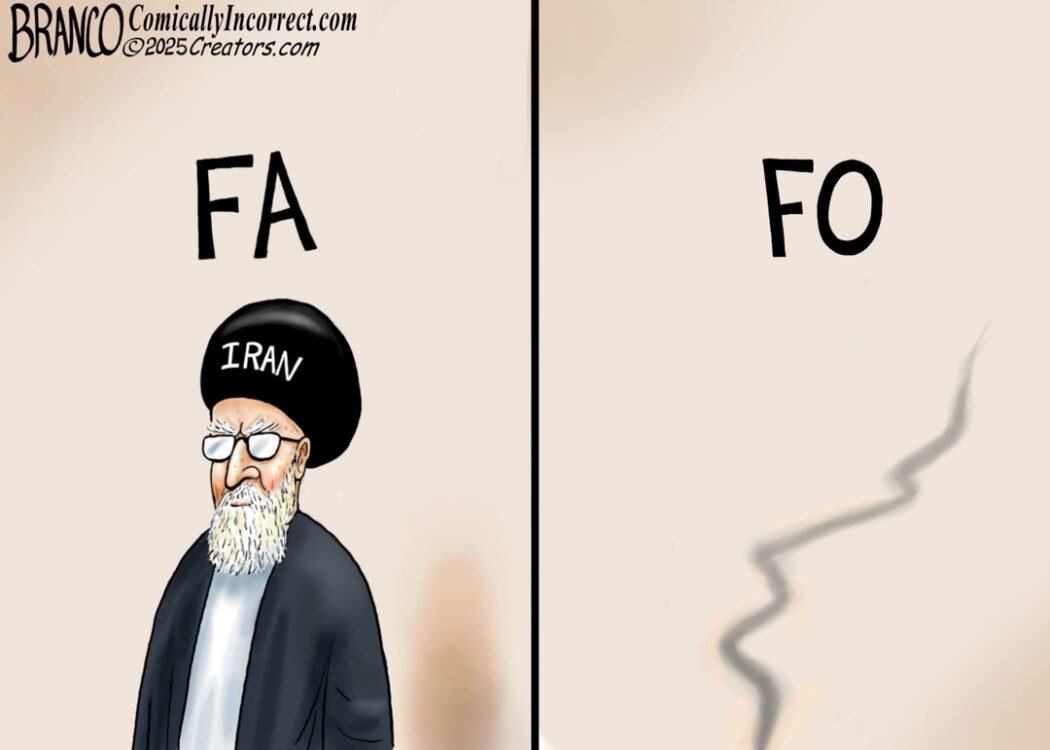
Today’s Politically INCORRECT Cartoon by A.F. Branco


Branco Cartoon – Deal or No Deal

A.F. Branco | on June 16, 2025 | https://comicallyincorrect.com/branco-cartoon-deal-or-no-deal/

Israel Attacks Iran Nuclear Sites and More
A Political Cartoon by A.F. Branco 2025

Facebook Twitter Pinterest Flipboard

A.F. Branco Cartoon – After years of Iran killing our soldiers, bombing Israel, and financing their terrorist puppets (Oct 7), Israel had finally had enough and bombed their nuclear facilities along with their top-level officials. This is after Trump gave them 60 days to make a deal. On Day 61, the bombing started.

BRANCO TOON STORE

Shock Report: Iran Admits Israel Has Infiltrated the “Highest Offices” of Its Government – Even Counter-Espionage Units Are Filled with Israeli Agents

By Jim Hoft – The Gateway Pundit – June 15, 2025

On Friday, Israel launched an aerial attack that decimated Iran’s military leadership and destroyed much of Iran’s nuclear and military capabilities.
This was a huge blow to Iran but not unexpected. The US had recalled several diplomats and officials across the MidEast earlier in the week in anticipation of an Israeli military strike on Iran.
In two days of aerial strikes Israel eliminated several of the top Iranian officials sleeping in their homes in Tehran… READ MORE

DONATE to A.F. Branco Cartoons – Tips accepted and appreciated – $1.00 – $5.00 – $25.00 – $50.00 – it all helps to fund this website and keep the cartoons coming. Also Venmo @AFBranco – THANK YOU!

A.F. Branco has taken his two greatest passions (art and politics) and translated them into cartoons that have been popular all over the country in various news outlets, including NewsMax, Fox News, MSNBC, CBS, ABC, and “The Washington Post.” He has been recognized by such personalities as Rep. Devin Nunes, Dinesh D’Souza, James Woods, Chris Salcedo, Sarah Palin, Larry Elder, Lars Larson, Rush Limbaugh, Elon Musk, and President Trump.

Trump: Ukraine-Russia Fight Is Biden’s War, Not Mine


By Sam Barron    |   Monday, 14 April 2025 12:13 PM EDT

Read more at https://www.newsmax.com/newsfront/donald-trump-ukraine-russia/2025/04/14/id/1206837/

President Donald Trump pointed out Monday on his Truth Social account that the war between Russia and Ukraine began during President Joe Biden’s administration.

“The war between Russia and Ukraine is Biden’s war, not mine. I just got here, and for four years during my term, had no problem in preventing it from happening,” Trump wrote, adding that he “had nothing to do with this war” but is working “diligently to get the death and destruction to stop.”

“If the 2020 presidential election was not rigged, and it was, in so many ways, that horrible war would never have happened,” he continued. “President [Volodymyr] Zelenskyy and Crooked Joe Biden did an absolutely horrible job in allowing this travesty to begin. There were so many ways of preventing it from ever starting. But that is the past. Now we have to get it to stop, and fast. So sad!”

On 60 Minutes Sunday, Zelenskyy called on Trump to support Ukraine.

“President Trump, being a strong president of a strong country, must be on Ukraine’s side,” Zelenskyy said. “I think it is wrong that America wants to be neutral.”

Zelenskyy also warned Russian President Vladimir Putin’s ultimate goal could result in a World War.

“If we do not stand firm, he [Putin] will advance further,” Zelenskyy told CBS News. “It is not just idle speculation; the threat is real. Putin’s ultimate goal is to revive the Russian empire and reclaim territories currently under NATO protection. Considering all of this, I believe it could escalate into a world war. There won’t be a safe place, there won’t be a safe place for [anyone].”

Sam Barron 

Sam Barron has almost two decades of experience covering a wide range of topics including politics, crime and business.

Related Stories:

© 2025 Newsmax. All rights reserved.

Hamas OKs Draft Agreement of a Gaza Ceasefire, Release of Some Hostages


Tuesday, 14 January 2025 03:35 PM EST

Hamas OKs Draft Agreement of a Gaza Ceasefire, Release of Some Hostages
An Ultra-orthodox Jewish man walks past a graffiti that displays portraits of hostages held by Hamas in Gaza, in Jerusalem, on Monday, Jan. 13, 2025. (AP Photo/Ohad Zwigenberg)

Read more at https://www.newsmax.com/politics/israel-palestinians-hamas-war-news-01-14-2025/2025/01/14/id/1195054/

Hamas has accepted a draft agreement for a ceasefire in the Gaza Strip and the release of dozens of hostages, two officials involved in the talks said Tuesday. Mediators for the United States and Qatar said Israel and the Palestinian militant group were at the closest point yet to sealing a deal to bring them a step closer to ending 15 months of war.

The Associated Press obtained a copy of the proposed agreement, and an Egyptian official and a Hamas official confirmed its authenticity. An Israeli official said progress has been made, but the details are being finalized. All three officials spoke on condition of anonymity to discuss the talks.

“I believe we will get a ceasefire,” U.S. Secretary of State Antony Blinken said during a speech Tuesday, asserting it was up to Hamas. “It’s right on the brink. It’s closer than it’s ever been before,” and word could come within hours, or days.

The United States, Egypt and Qatar have spent the past year trying to mediate an end to the war and secure the release of dozens of hostages captured in Hamas’ Oct. 7, 2023, attack that triggered it. Nearly 100 people are still captive inside Gaza, and the military believes at least a third are dead.

Any deal is expected to pause the fighting and bring hopes for winding down the most deadly and destructive war Israel and Hamas have ever fought, a conflict that has destabilized the Middle East and sparked worldwide protests. It would bring relief to the hard-hit Gaza Strip, where Israel’s offensive has reduced large areas to rubble and displaced around 90% of the population of 2.3 million, many at risk of famine.

If a deal is reached, it would not go into effect immediately. The plan would need approval from Prime Minister Benjamin Netanyahu’s Security Cabinet and then his full Cabinet. Both are dominated by Netanyahu allies and are likely to approve any proposal he presents.

Officials have expressed optimism before, only for negotiations to stall while the warring sides blamed each other. But they now suggest they can conclude an agreement ahead of the Jan. 20 inauguration of U.S. President-elect Donald Trump, whose Mideast envoy has joined the negotiations.

Hamas said in a statement that negotiations had reached their “final stage.”

In the Oct. 7 attack, Hamas-led militants killed around 1,200 people, mostly civilians, and abducted another 250. Around half those hostages were freed during a brief ceasefire in November 2023. Of those remaining, families say, two are children, 13 are women and 83 are men.

Israel’s retaliatory offensive has killed over 46,000 Palestinians, more than half of them women and children, according to Gaza’s Health Ministry, which does not say how many of the dead were combatants.

Israeli strikes across Gaza overnight and into Tuesday killed at least 18 Palestinians, including two women and four children, according to local health officials, who said one woman was pregnant and the baby died as well.

There was no immediate comment from the Israeli military. Israel says it only targets militants and accuses them of hiding among civilians.

The three-phase agreement — based on a framework laid out by U.S. President Joe Biden and endorsed by the U.N. Security Council — would begin with the release of 33 hostages over a six-week period, including women, children, older adults and wounded civilians in exchange for hundreds of Palestinian women and children imprisoned by Israel.

Among the 33 would be five female Israeli soldiers, each to be released in exchange for 50 Palestinian prisoners, including 30 militants who are serving life sentences. The Israeli official said Israel assumes most of the 33 are alive.

During this 42-day phase, Israeli forces would withdraw from population centers, Palestinians could start returning to what remains of their homes in northern Gaza and there would be a surge of humanitarian aid, with some 600 trucks entering each day.

Details of the second phase still must be negotiated during the first. Those details remain difficult to resolve — and the deal does not include written guarantees that the ceasefire will continue until a deal is reached. That means Israel could resume its military campaign after the first phase ends.

The Israeli official said “detailed negotiations” on the second phase will begin during the first. He said Israel will retain some “assets” throughout negotiations, referring to a military presence, and would not leave the Gaza Strip until all hostages are home.

The three mediators have given Hamas verbal guarantees that negotiations will continue as planned and that they will press for a deal to implement the second and third phases before the end of the first, the Egyptian official said.

The deal would allow Israel throughout the first phase to remain in control of the Philadelphi corridor, the band of territory along Gaza’s border with Egypt, which Hamas had initially demanded Israel withdraw from. Israel would withdraw from the Netzarim corridor, a belt across central Gaza where it had sought a mechanism for searching Palestinians for arms when they return to the territory’s north.

In the second phase, Hamas would release the remaining living captives, mainly male soldiers, in exchange for more prisoners and the “complete withdrawal” of Israeli forces from Gaza, according to the draft agreement.

Hamas has said it will not free the remaining hostages without an end to the war and a complete Israeli withdrawal, while Netanyahu has vowed in the past to resume fighting until Hamas’ military and governing capabilities are eliminated.

Unless an alternative government for Gaza is worked out in those talks, it could leave Hamas in charge of the territory.

In a third phase, the bodies of remaining hostages would be returned in exchange for a three- to five-year reconstruction plan for Gaza under international supervision.

Blinken on Tuesday was making a last-minute case for a proposal for Gaza’s postwar reconstruction and governance that outlines how it could be run without Hamas in charge.

Israel and Hamas have come under renewed pressure to halt the war before Trump’s inauguration. Trump said late Monday a ceasefire was “very close.”

Thousands of Israelis rallied in Tel Aviv on Tuesday night in support of a deal they have long encouraged. “This is not about politics or strategy. It’s about humanity and the shared belief that no one should be left behind in darkness,” said a hostage released earlier from Gaza, Moran Stella Yanai.

But in Jerusalem, hundreds of hardliners marched against a deal, some chanting, “You don’t make a deal with the devil,” a reference to Hamas.

In the Israeli-occupied West Bank, families of Palestinian prisoners gathered as well. “I tell the mothers of the prisoners to put their trust in the almighty and that relief is near, God willing,” said the mother of one prisoner, Intisar Bayoud.

And inside Gaza, an exhausted Oday al-Halimy expressed hope from a tent camp for the displaced. “Certainly, Hamas will comply with the ceasefire, and Israel is not interested in opposing Trump or angering him,” he said.

A child born in Gaza on the first day of the war, Massa Zaqout, sat in pink pajamas in another tent camp, playing with toys. “We’re eagerly waiting for a truce to happen so we can live in safety and stability,” her mother, Rola Saqer, said.

Copyright 2025 The Associated Press. All rights reserved. This material may not be published, broadcast, rewritten or redistributed without permission.

Biden: US monitoring Syrian rebel groups; raises concerns for Americans in Syria


By Michael Gryboski, Mainline Church Editor | Sunday, December 08, 2024

Read more at https://www.christianpost.com/news/biden-us-monitoring-syrian-rebel-groups-after-assads-downfall.html/

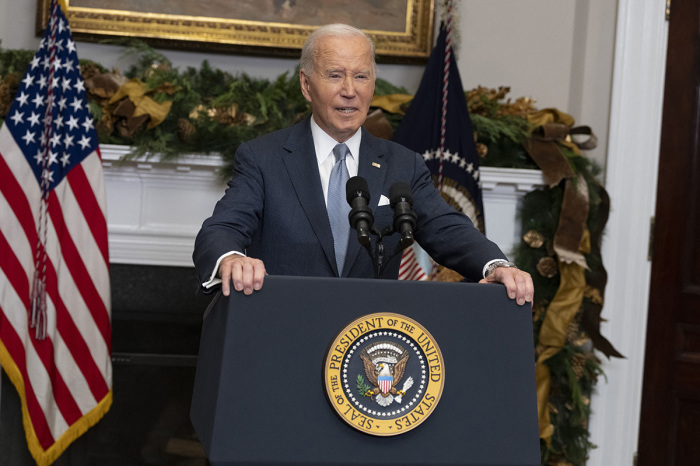
U.S. President Joe Biden speaks about the situation in Syria in the Roosevelt Room at the White House in Washington, D.C., on Dec. 8, 2024, following a crisis meeting to discuss the sudden overthrow by Islamist-led rebels of President Bashar al-Assad.
U.S. President Joe Biden speaks about the situation in Syria in the Roosevelt Room at the White House in Washington, D.C., on Dec. 8, 2024, following a crisis meeting to discuss the sudden overthrow by Islamist-led rebels of President Bashar al-Assad. | CHRIS KLEPONIS/AFP via Getty Images

President Joe Biden said the United States is monitoring rebel groups in Syria following the downfall of the Assad regime and is concerned for the safety of Americans living in the country.

In remarks given on Sunday afternoon, Biden addressed reports that Syrian President Bashar al-Assad had fled Syria as rebel forces took over the capital of Damascus.

“At long last, the Assad regime has fallen,” Biden said. “This regime brutalized, tortured and killed hundreds of thousands of innocent Syrians. The fall of the regime is a fundamental act of justice. It’s a moment of historic opportunity for the long-suffering people of Syria.”

Biden acknowledged that there was much “uncertainty” facing Syria, noting that there is a chance that extremist Islamic groups might “take advantage” of the power vacuum to take over. Biden promised to continue military efforts against Islamic State elements in the country, to work with regional leaders to maintain stability, and “engage with all Syrian groups” to create “an independent sovereign Syria.”

“We will remain vigilant,” he continued. “Make no mistake: some of the rebel groups that took down Assad have their own grim record of terrorism and human rights abuses,” he added, likely referring to Hayat Tahrir al-Sham (HTS), which is designated as a terrorist organization by the U.S. and U.K., among other groups. In 2018, The U.S. imposed a $10 million bounty on the head of HTS’ leader, Abu Mohammad al-Jolani, who has been designated as a terrorist since 2013.

“We’ve taken note of statements by the leaders of these rebel groups in recent days. They’re saying the right things now, but as they take on greater responsibility, we will assess not just their words, but their actions.”

Biden added that his administration was “mindful” that there were Americans present in Syria, including individuals who have been taken hostage, such as Austin Tice, a Marine-turned-journalist, who was abducted by jihadist militants over 12 years ago.

https://www.c-span.org/video/?c5145220/user-clip-president-biden-monitoring-hts-rescue-austin-tice

“It is now incumbent upon all the opposition groups to seek a role in governing Syria,” Biden added. “To demonstrate their commitment to the rights of all Syrians, the rule of law, and the protection of religious and ethnic minorities.”

Late Saturday night, after more than a decade of civil war, rebel forces successfully forced Assad to flee the country, ending around 50 years of his family ruling Syria as a dictatorship. Following Assad’s departure, crowds flooded the streets of Damascus, chanting “Allah is great” and shouting anti-Assad slogans, reported The Associated Press.

“My feelings are indescribable,” said Omar Daher, a 29-year-old lawyer, in comments given to the AP. “After the fear that [Assad] and his father made us live in for many years, and the panic and state of terror that I was living in, I can’t believe it.”

Despite the celebrations, some have expressed concern over the potential fallout from the regime collapse, especially for the nation’s vulnerable Christian community and other minority groups. Since the violence began in 2011, Syria’s native Christian population has declined considerably from around 10% of the country, or 1.5 million, to approximately 300,000 at present, reported Crux Now.

Follow Michael Gryboski on Twitter or Facebook

Victor Davis Hanson Op-ed: Restoring Deterrence Will Prevent Endless Wars


By: Victor Davis Hanson | November 15, 2024

Read more at https://www.dailysignal.com/2024/11/15/restoring-deterrence-will-prevent-endless-wars/

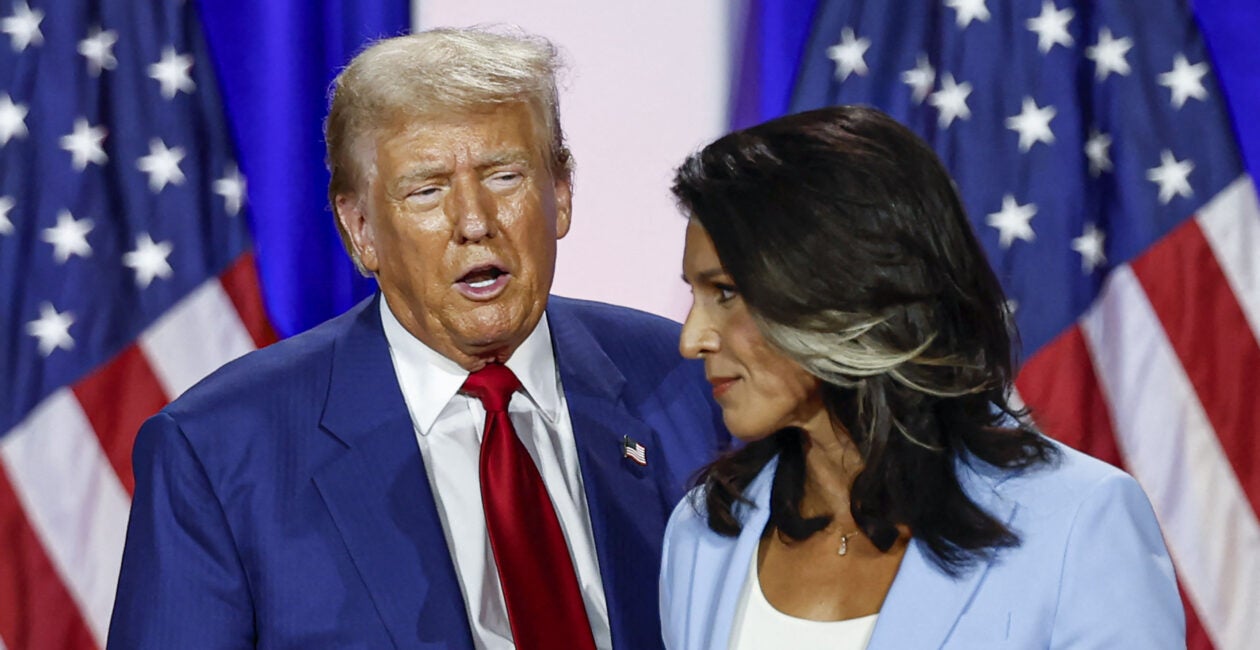
President Donald Trump’s selection of JD Vance as vice president, along with Tulsi Gabbard, RFK Jr., and Tucker Carlson as close advisers may be misinterpreted by scheming foreign adversaries as proof of Trump neo-isolationism. (Kamil Krzaczynski/AFP via Getty Images)

On Jan. 3, 2020, the Trump administration conducted a drone strike near Baghdad International Airport, killing Iranian Maj. Gen. Qassem Soleimani. Soleimani had a long record of waging surrogate wars against Americans, especially during the Iraq conflict and its aftermath.

After the Trump cancellation of the Iran Deal, followed by U.S. sanctions, Soleimani reportedly stepped-up violence against regional American bases—most of which President Donald Trump himself ironically wished to remove. A few days later, Iran staged a performance-art retaliatory strike against Americans in Iraq and Syria, assuming Trump had no desire for a wider Middle East war.

So, Iran launched 12 missiles that hit two U.S. airbases in Iraq. Supposedly, Tehran had warned the Trump administration of the impending attacks that killed no Americans. Later reports, however, suggested that some Americans suffered concussions, while more damage was done to the bases than was initially disclosed. Nonetheless, this Iranian interlude seemed to reflect Trump’s agenda of avoiding “endless wars” in the Middle East while restoring deterrence that prevented, not prompted, full-scale conflicts.

Yet in a second Trump administration, rethreading the deterrence needle without getting into major wars may become far more challenging. The world of today is far more dangerous than when Trump left in 2021.

An inept Biden administration has utterly destroyed U.S. deterrence abroad through both actual and symbolic disasters: the Chinese dressing down of U.S. diplomats in Anchorage; the humiliating skedaddle from Afghanistan; the brazen flight of a Chinese spy balloon across the U.S.; the invasion of Ukraine by Russia; the Oct. 7, 2023 massacre of 1,200 Israelis; the serial Houthi attacks on international shipping in the Red Sea; the visible restraint of Israel from fully replying to Iranian missile attacks on its homeland; and renewed bellicosity on the part of both North Korea and China toward American allies such as Japan, South Korea, and Taiwan.

Of course, a second-term Trump must radically reform the Pentagon and beef up the military while warning enemies of the consequences to follow from any unwise aggression. But if opponents believe such admonitions remain only vocal threats, then empty verbiage surely will erode deterrence further—such as President Joe Biden’s serial and empty braggadocio, “Don’t!”

Biden’s past theatrical finger-shaking translated into aggressors like Russian President Vladimir Putin going into Ukraine, Iran sending missiles into Israel, and the Houthis serially hitting shipping in the Red Sea. Given the past messes of the Iraqi, Libyan, and Syrian interventions, and the catastrophic Biden humiliation in Afghanistan, Trump in 2024 is much more emphatic about the need to avoid such overseas dead-end entanglements or even the gratuitous use of force that historically can sometimes lead to tit-for-tat entanglements.

Still, Trump’s selection of JD Vance as vice president, along with Tulsi Gabbard, RFK Jr., and Tucker Carlson as close advisers, coupled with the announcements that former Secretary of State Mike Pompeo and prior U.N. Ambassador Nikki Haley will not be in the administration, may be misinterpreted by scheming foreign adversaries as proof of Trump neo-isolationism.

Moreover, the U.S. is battered by an unsustainable $37 trillion national debt and a nonexistent southern border that saw 12 million illegal aliens enter with impunity. So, the use of force abroad is now often seen in a zero-sum fashion as coming at the expense of unaddressed American needs at home.

Moreover, a woke, manpower-short military has not achieved strategic advantages from wars abroad, while disparaging and alienating the very working-class recruits who disproportionately fight and die in them.

Recently, even as President-elect Trump’s inner circle emphasized an end to endless conflicts, Trump warned Putin not to escalate his attacks against Ukraine. Yet that advice was followed by a Russian massive drone onslaught against civilian Ukrainian targets. Putin no doubt wishes to encourage American enemies to test Trump’s deterrent rhetoric against his campaign’s domestic promises to mind America’s own business at home.

Is there a way to square the deterrence circle?

Trump will have to speak clearly and softly while carrying a club. And for the first few months of his administration, he will be tested as never before to make it clear to Iran and its terrorist surrogates, China, North Korea, and Russia, that aggression against U.S. interests will be swiftly and quietly met with disproportionate and overwhelming repercussions.

Yet Trump will likely have to rely on drones, missiles, and airstrikes and not on major engagements, to deter enemies from aggression—and his domestic critics from claiming he turned into a globalist interventionist.

He is not.

Trump remains a Jacksonian. But such deterrence entails warning from time to time the reckless and adventurous abroad that our allies have no better friend than America and our adversaries no worse enemy. In other words, Trump must remind Americans only by periodically deterring enemies can he prevent endless wars.

(C)2024 Tribune Content Agency, LLC.

Fears of Wider War in Middle East Grow as Israel, Iran Trade Threats


Wednesday, 02 October 2024 03:01 PM EDT

Read more at https://www.newsmax.com/world/globaltalk/israel-hezbollah-hamas-latest-mideast-2-october-2024/2024/10/02/id/1182625/

The Middle East moved closer to a long-feared regional war Wednesday, a day after Iran fired a barrage of missiles at Israel and Israel said it began limited ground incursions into Lebanon targeting the Iran-backed Hezbollah militia. Israel said it intercepted many of the missiles, and officials in Washington said U.S. destroyers assisted in Israel’s defense. Iran said most of its missiles hit their targets. There have been no reports of casualties.

Israeli Prime Minister Benjamin Netanyahu vowed late Tuesday to retaliate against Iran, which he said, “made a big mistake tonight and it will pay for it.” An Iranian commander threatened wider strikes on infrastructure if Israel retaliates. U.S. President Biden said Wednesday that he would not support an Israeli attack targeting Iran’s nuclear program.

The United Nations Security Council held an emergency meeting for Wednesday to address the spiraling conflict.

Israel said Wednesday that eight of its soldiers have been killed in combat in southern Lebanon.

Israel and Hezbollah have traded fire across the Lebanon border almost daily since the day after Hamas’ cross-border attack on Oct. 7, 2023, which killed 1,200 Israelis and took 250 others hostage. Israel declared war on the militant group in the Gaza Strip in response. More than 41,000 Palestinians have been killed in the territory, and just over half the dead have been women and children, according to local health officials.

Direct hit

At least one aircraft hangar at a key Israeli military air base appears to have taken a direct hit during a massive barrage of Iranian missiles, according to a satellite image analyzed by The Associated Press. Images of the Nevatim air base in southern Israel on Wednesday show a large hole blown in the roof of a row of buildings near the main runway. Large pieces of debris can be seen spread around the building.

Israel’s military did not immediately respond to a request for comment about the satellite images.

Nevatim is home to the Israeli Air Force’s most advanced aircraft, including U.S.-produced F-35 Lightening II stealth fighter jets. It is not clear from the satellite imagery whether any aircraft were in the hanger when it was struck. Nevatim also sustained light damage during an Iranian missile and drone attack in April.

Lebanon weighs in

Lebanon’s U.N. ambassador says his government rejects the war between Israel and Hezbollah militants in the country. Hadi Hachem told an emergency meeting of the U.N. Security Council Wednesday that the government wants the enforcement of a U.N. Security Council resolution that was supposed to end the last Israel-Hezbollah war in 2006. It called for all armed groups, including Hezbollah, to be disarmed and the deployment of Lebanese forces to the southern border with Israel. None of this has happened.

The Lebanese ambassador said fully implementing the resolution is the only solution to the ongoing war and Israel’s “barbaric aggression.” He said Lebanon is opening enlistment for 1,500 new soldiers to strengthen the national army’s presence in the south.

“Lebanon today is stuck between the Israeli destruction machine and the ambitions of others in the region,” Hachem said, alluding to Iran’s support for Hezbollah.

Americans flee

The State Department says about 100 American citizens and family members have left Lebanon on a flight contracted with a commercial airline. Department spokesman Matthew Miller said Wednesday that the flight to Istanbul was not a charter flight but also was not on the Lebanese national carrier Middle East Airlines, which is the only commercial airline flying scheduled flights in and out of Beirut. Since Sept. 28, MEA has made about 800 seats on its flights out of Beirut available for American citizens, but Miller could not say how many had taken those MEA flights.

He said some 6,000 American citizens have now asked for information from the U.S. Embassy in Beirut on how they might be able to leave the country, although only a small fraction of those have asked for actual assistance.

Escape to Syria

Thousands of Syrians and Lebanese continue to pour into Syria to escape Israeli airstrikes in southern Lebanon. On Wednesday, an Associated Press team saw hundreds crowding the Jousieh border crossing, one of several points of entry into Syria. The crossing is around 30 kilometers (18 miles) from Syria’s central city of Homs, where many said they were headed. Most of those waiting to enter Syria were from eastern Lebanon’s city of Baalbek and surrounding areas, which have been hard hit by Israeli airstrikes in recent days. The militant group Hezbollah has a strong presence in that region, but many of those killed and wounded have been civilians. Some came from as far as the southern suburbs of Beirut.

Ola Hallaq, her husband and two kids were among those waiting to be processed. Originally from Homs, she fled Syria at the start of the civil war in 2011 and settled in Baalbek. Now, as Israel pounds eastern Lebanon, the family is returning home despite the uncertainty and lack of income.

“I’m returning to my country because of the war … there was so much destruction all around,” she said.

Dabbah Mashaal, an official at the crossing, said 10,000 displaced Syrians and 7,700 Lebanese have crossed the border in recent days.

UN Ire

The United Nations says Israel’s ban on Secretary-General Antonio Guterres entering the country is a “political statement.” U.N. spokesperson Stephane Dujarric told reporters Wednesday that Foreign Minister Israel Katz saying Guterres is “persona non grata” is “one more attack on the United Nations staff that we’ve seen from the government of Israel.”

Katz accuses Guterres of being biased against Israel, and says he never condemned Hamas’ Oct. 7 attacks on southern Israel. Israel also claims staff from the U.N. aid agency helping Palestinian refugees, UNRWA, are Hamas members who participated in the Oct. 7 attacks.

Dujarric countered that Guterres has repeatedly condemned the Hamas attacks and sexual violence, and stressed that the U.N. still engages with Israel “at the operational level and other levels.”

JOINT BASE ANDREWS, Md. — President Joe Biden says he will not support an Israeli attack on sites related to Tehran’s nuclear program.

“The answer is no,” Biden said Wednesday, when asked if he would support such retaliation after Iran fired about 180 missiles at Israel on Tuesday. Biden’s comments came after he and fellow Group of Seven leaders spoke by phone on Wednesday to discuss coordinating new sanctions against Iran. The White House said in a statement that the G7 leaders “unequivocally condemned Iran’s attack against Israel” and Biden reiterated the United States’ “full solidarity and support to Israel and its people.”

All the while, the administration has signaled that it’s urging that Israel display restraint in how it responds to Tuesday’s missile attack, which Biden said was “ineffective and defeated.”

Hamas claims responsibility

Hamas’ military wing has claimed responsibility for a mass shooting in Tel Aviv that left seven people dead and wounded 16 more. It said the two attackers, Mohammed Mesek and Ahmed Himouni, were its militants who hailed from the southern West Bank city of Hebron. Israeli police said the two opened fire Tuesday evening in the Jaffa neighborhood of Tel Aviv, including shooting directly into a light rail carriage crowded with passengers that was stopped at a station. Police said the pair were shot and killed by security guards and armed pedestrians.

The attack came moments before Iran launched a massive barrage of rockets towards Israel, sending people into bomb shelters across the country.

It remains unclear how the two men entered Israel from the West Bank. Hamas, which has ruled Gaza since 2007, is active in various cities and refugee camps in the West Bank.

On Wednesday, locals left flowers and candles at the train stop, where bullet holes peppered the signs and benches.

Maya Brandwine said she was at a coffee shop on the street when the shooting broke out. During the subsequent Iranian missile attack, she took cover in a bomb shelter as police swept for suspects.

“It’s a nightmare, and we’re starting to get used to it,” she said, blaming the policies of Prime Minister Benjamin Netanyahu and far-right National Security Minister Itamar Ben-Gvir for the violence.

Copyright 2024 The Associated Press. All rights reserved. This material may not be published, broadcast, rewritten or redistributed without permission.

Iran attack on Israel ‘ineffective’ but a ‘significant escalation’: White House


By Michael Dorgan Fox News | Published October 1, 2024, 3:40pm EDT

Read more at https://www.foxnews.com/world/iran-attack-on-israel-ineffective-but-a-significant-escalation-white-house

National Security Adviser Jake Sullivan says that the Iranian missile attack on Israel was “defeated and ineffective”, and that the U.S. military coordinated with the Israeli Defense Forces (IDF) to repel the strikes. Iran launched nearly 200 ballistic missiles towards targets in Israel on Tuesday, Sullivan said at a Tuesday White House briefing, noting the move was a “significant escalation.”

The strikes were in response to the deaths of Hezbollah and Hamas leaders, Iran says. The move comes after weeks of Israeli strikes against Tehran’s proxies in the region.

LIVE UPDATES: ISRAEL ORDERS LEBANON EVACUATIONS AS LIMITED GROUND OPERATION AGAINST HEZBOLLAH IS UNDERWAY

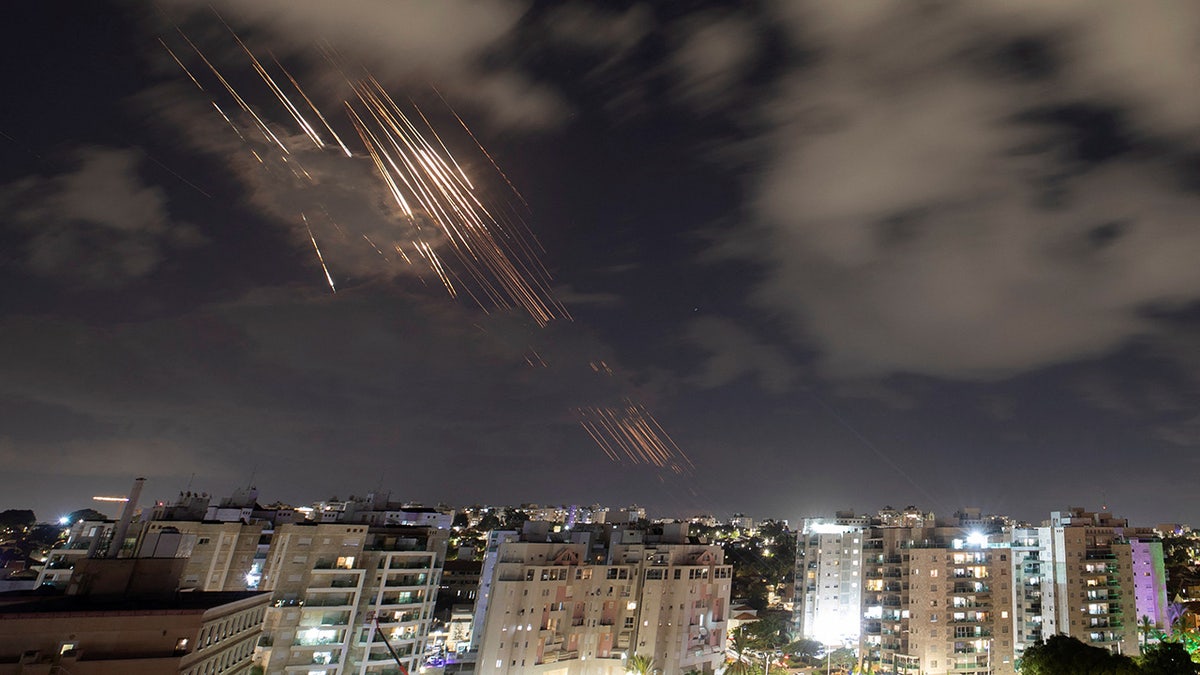
Israel's Iron Dome anti-missile system intercepts rockets
Israel’s Iron Dome anti-missile system intercepts rockets, as seen from Ashkelon, Israel, on Oct. 1, 2024. (REUTERS/Amir Cohen)

Sullivan said no deaths were reported on the Israeli side, although the White House is monitoring the reported death of a Palestinian civilian in Jericho in the West Bank.

“U.S. naval destroyers joined Israeli Air Defense units in firing interceptors to shoot down inbound missiles. President Biden and Vice President Harris monitored the attack and the response from the White House Situation Room, joined in person and remotely by their national security team,” Sullivan said. 

“We do not know of any damage to aircraft or strategic military assets in Israel. In short, based on what we know at this point, this attack appears to have been defeated and ineffective. The word fog of war was invented for a situation like this. This is a fluid situation.”

Many missiles were intercepted by Israel’s missile defense systems, while others did hit the ground.  The Pentagon says the U.S. fired approximately 12 interceptors against Iranian missiles.

National Security Adviser Jake Sullivan speaking
National Security Adviser Jake Sullivan says that the Iranian missile attack on Israel was “defeated and ineffective” and that the U.S. military coordinated with the IDF to repel the strikes.  (Fox News)

PENTAGON SENDING A ‘FEW THOUSAND’ PERSONNEL TO MIDDLE EAST DAY AFTER BIDEN SAID HE WOULDN’T ADD COMBAT TROOPS

“This is a significant escalation by Iran, a significant event, and it is equally significant that we were able to step up with Israel and create a situation in which no one was killed in this attack in Israel… We are now going to look at what the appropriate next steps are to secure, first and foremost, American interests and then to promote stability to the maximum extent possible as we go forward,” Sullivan said. 

He said the U.S. will consult with the Israelis on next steps in terms of response and how to deal with the Iranian attack.

The White House is particularly focused on protecting U.S. service members in the region and implored American citizens in Lebanon to follow the State Department’s guidance of finding civilian commercial means to leave the country, Sullivan said.

Rockets fly in the sky, amid cross-border hostilities between Hezbollah and Israel
Rockets fly in the sky, amid cross-border hostilities between Hezbollah and Israel, as seen from Tel Aviv, Israel, on Oct. 1, 2024.  (REUTERS/Ammar Awad)

Sullivan also expressed his condolences to the victims who were killed in a shooting in the Israeli city of Jaffa, located near Tel Aviv on Tuesday. At least eight people were killed and at least seven injured, local officials have told Fox News. The incident, which is believed to be a terror attack, took place Tuesday outside a newly built light rail station on Jerusalem Street. Authorities say at least two individuals who opened fire on a crowd of people have been neutralized

Israel Defense Forces (IDF) had warned citizens to shelter in place and follow instructions from the Home Front Command as the Jewish State’s Iron Dome anti-missile defense system worked to intercept the incoming rockets on Tuesday. 

Iran’s Islamic Revolutionary Guard Corps said this latest barrage of missiles is in retaliation for the killing of Hezbollah leader Hassan Nasrallah in Beirut, Lebanon, in an Israeli airstrike late last week and the killing of Hamas leader Ismail Haniyeh in Tehran in July, according to Fox News Chief Foreign Correspondent Trey Yingst.

Jaffa Shooting Terrorism Israel
A gunshot victim is transported away from the scene of the shooting Tuesday. Emergency responders have reported multiple deaths as well as more victims in critical condition. (Gideon Markowicz/TPS-IL)

Iran’s Revolutionary Guard warned in a statement released by Iranian state media that if Israel responds to the missile barrage, “it will face crushing attacks.” A senior White House official told Fox News earlier Tuesday morning that Iran was preparing to “imminently” launch a ballistic missile attack against Israel.

While White House Press Secretary Karine Jean-Pierre did not directly answer when asked if the United States had a heads-up from Iran about the strike ahead of time, Fox News was told by the Pentagon that they were “not aware of any pre-warning by Iran.”

Fox News’ Stephen Sorace, Liz Friden, Timothy H.J. Nerozzi, Trey Yingst and Yonat Friling contributed to this report. 

Michael Dorgan is a writer for Fox News Digital and Fox Business.

You can send tips to michael.dorgan@fox.com and follow him on Twitter @M_Dorgan.

Iran Fires Nearly 200 Ballistic Missiles at Israel


By: Virginia Allen | October 01, 2024

Read more at https://www.dailysignal.com/2024/10/01/iran-fires-nearly-200-ballistic-missiles-israel/

Missile falls from the sky
Israel intercepts an Iranian ballistic missiles near the northern city of Baqa al-Gharbiya, Oct. 1. (Ahmad Gharabli/AFP/Getty Images)

Sirens sounded all over Israel Tuesday night as ballistic missiles flared overhead. Millions of Israelis were directed to hide in bomb shelters while at least 180 Iranian projectiles entered Israeli airspace.

Israel’s Iron Dome intercepted most of the missiles, but some managed to get through and hit locations in central and southern Israel, according to the Israel Defense Forces. Two U.S. Navy destroyers aided Israel in the attack and fired about 12 interceptors against the missiles, according to the Pentagon.

Iran carried out a similar missile attack against Israel in April. Most of the missiles were shot down, but an air base in southern Israel did sustain minor damage. After the spring attack, President Joe Biden told Israeli Prime Minister Benjamin Netanyahu to “take the win.” 

Biden said Tuesday that he and Vice President Kamala Harris “convened our national security team to discuss Iranian plans to launch an imminent missile attack against Israel. We discussed how the United States is prepared to help Israel defend against these attacks and protect American personnel in the region.”

Secretary of State Antony Blinken said Tuesday that the U.S. is “committed to Israel’s defense,” but did not give specifics. Iran’s attack came in response to Israel killing multiple terrorist leaders in recent days and weeks, including Hamas and Hezbollah leaders.

Iran called its missile attack on Israel a “legal, rational, and legitimate response to the terrorist acts of the Zionist regime—which involved targeting Iranian nationals and interests and infringing upon the national sovereignty of the Islamic Republic of Iran.”

Iran warned Israel and its allies: “Should the Zionist regime dare to respond or commit further acts of malevolence, a subsequent and crushing response will ensue. Regional states and the Zionists’ supporters are advised to part ways with the regime.”

There were no immediate reports of deaths in Israel following the attack, but at least six people were killed in a shooting in Tel Aviv during the rocket attack. Police neutralized the attackers and say it was an act of terrorism. 

The Pentagon is discussing next steps with Israel.

Gaza Cease-Fire Talks Underway in Doha as Deaths Top 40,000


Thursday, 15 August 2024 03:24 PM EDT

Read more at https://www.newsmax.com/politics/truce-gaza/2024/08/15/id/1176694/

The United States hailed a “promising start” to Gaza cease-fire talks Thursday, as pressure mounted for a deal to halt the spread of a war that the Hamas-run territory’s health ministry said has killed 40,005. The conflict sparked by Hamas’s unprecedented October 7 attack on Israel has devastated Gaza, displaced nearly all of its population at least once and triggered a towering humanitarian crisis.

Talks involving CIA director William Burns opened in the Qatari capital Doha, US National Security Council spokesman John Kirby said.

“Today is a promising start,” Kirby told reporters in Washington, adding: “There remains a lot of work to do.”

The talks were expected to continue on Friday, he said.

Hamas official Osama Hamdan said the movement did not take part in Thursday’s meeting but stood ready to join the indirect negotiations if they produced new commitments from Israel. The Palestinian group has demanded the implementation of a truce plan laid out in late May by President Joe Biden.

“If the mediators succeed in forcing the (Israeli) occupation to agree, we would, but so far there’s nothing new,” Hamdan told AFP.

He said Hamas would not take part in protracted negotiations that “give (Israeli Prime Minister Benjamin) Netanyahu more time to kill the Palestinian people”.

So far, there has been only one truce in November, when Gaza militants released 105 hostages seized in the October 7 attack, the Israelis among them in exchange for 240 Palestinian prisoners held in Israeli jails.

The latest diplomatic push comes as the health ministry in Gaza said the death toll in the besieged Palestinian territory had surpassed 40,000 — which UN chief Antonio Guterres said was “yet another reason” why a ceasefire was needed now.

“Given the… disturbing number of people who remain unaccounted for, who may be trapped or dead under the rubble, this number may, if anything, be an undercount,” his spokesman Farhan Haq said.

“This is yet another reason why we need to have a ceasefire now, as well as the release of all hostages and unimpeded humanitarian assistance.”

The Gaza health ministry, which does not provide a breakdown of civilian and militant casualties, said the tally included 40 deaths in the previous 24 hours. The Israeli military said it had killed “more than 17,000” Palestinian militants in Gaza since the war began.

– ‘Time is now’ –

British foreign minister David Lammy and his French counterpart Stephane Sejourne are to discuss the truce talks with Israel’s top diplomat Israel Katz on Friday. In Beirut on Wednesday, visiting US envoy Amos Hochstein said a deal in Gaza “would also help enable a diplomatic resolution here in Lebanon and that would prevent an outbreak of a wider war”.

“We have to take advantage of this window for diplomatic action and diplomatic solutions. That time is now,” he added.

Hamas’s October 7 attack on southern Israel triggered the war and resulted in the deaths of 1,198 people, mostly civilians, according to an AFP tally of Israeli official figures. Militants also seized 251 people, 111 of whom are still held in Gaza, including 39 the military says are dead. Mediation efforts have repeatedly stalled since the week-long truce in November.

Hamas officials, some analysts and critics in Israel have said Netanyahu has sought to prolong the war for political gain. Israeli media this week quoted Defense Minister Yoav Gallant as privately telling a parliamentary committee that a hostage release deal “is stalling… in part because of Israel”.

Netanyahu’s office accused Gallant of adopting an “anti-Israel narrative” and said Hamas leader Yahya Sinwar is “the only obstacle to a hostage deal”.

– Bloodied children –

The latest mediation push follows the July 31 killing of Sinwar’s predecessor, Hamas political leader and truce negotiator Ismail Haniyeh. His killing during a visit to Tehran sent fears of a wider conflagration soaring. Iran and its regional allies blamed Israel and vowed retaliation. Israel has not claimed responsibility for the attack. Western leaders have urged Tehran to avoid hitting Israel over Haniyeh’s killing, which came hours after an Israeli strike in Beirut killed Hezbollah’s military commander.

Fallout from the conflict has drawn in Iran-aligned groups from Lebanon, Yemen, Iraq and Syria.

More than 370 Hezbollah members have been killed in 10 months of near daily cross-border fire with Israeli forces, according to an AFP tally, more than the Iran-backed movement lost in the 2006 war with Israel. On the Israeli side, 22 soldiers and 26 civilians have been killed, including in the annexed Golan Heights, according to military figures.

In Gaza, where the war has destroyed much of the territory’s housing and other infrastructure, relatively few deaths were reported on Thursday. In the deadliest bombardment, emergency services said air strikes killed five people in Gaza City. Israel’s military said troops had killed about 20 militants in Rafah, southern Gaza. On Wednesday, dead and wounded including bloodied children arrived at Nasser Hospital in the southern city of Khan Yunis after an Israeli strike.

“I was not pro-Hamas but now I support them and I want to fight,” one grieving man shouted.

© AFP 2024

West Tells Iran to ‘Stand Down’ on Israel Attack Threats


Monday, 12 August 2024 04:04 PM EDT

Read more at https://www.newsmax.com/world/globaltalk/iran/2024/08/12/id/1176230/

The United States and European allies called on Iran to “stand down” Monday, as fears mounted of an imminent attack on Israel that could spark an all-out war in the Middle East. Tensions are soaring in the region, with the United States rushing a missile submarine and an aircraft carrier group in a show of support for its key ally.

Iran and its Lebanese ally Hezbollah have vowed revenge for the killing of the political leader of the Palestinian group Hamas in Tehran, and of a Hezbollah commander in Beirut. International efforts to stave off an Iranian attack intensified, with US President Joe Biden and the leaders of France, Germany, Italy and Britain warning Tehran in a joint statement on Monday.

“We called on Iran to stand down its ongoing threats of a military attack against Israel and discussed the serious consequences for regional security should such an attack take place,” they said after speaking on Monday.

The White House warned that a “significant set of attacks” by Iran and its proxies was possible as soon as this week, saying that Israel shared the same assessment.

As the frantic diplomacy continued, German Chancellor Olaf Scholz and British Prime Minister Keir Starmer both called on Iranian President Masoud Pezeshkian to urge de-escalation. But Pezeshkian said Monday his country has the “right to respond to aggressors.”

Hamas political chief Ismail Haniyeh had been in Tehran for the new Iranian president’s inauguration last month when Haniyeh was killed in an attack that Iran has blamed on Israel. Israel assassinated Hezbollah commander Fuad Shukr in Beirut a day earlier, leaving the region on edge.

– ‘No further time to lose’ –

Israeli military spokesman Rear Admiral Daniel Hagari said his country was “ready to foil any threat in real time” but added that he was “not familiar” with reports that Iran was expected to launch an attack in the next 24 hours.

Israel’s Defense Minister Yoav Gallant said the country had strengthened defenses and organized “offensive options” as “threats from Tehran and Beirut may materialize.”

Washington and the four European nations meanwhile intensified their calls for a ceasefire in Gaza, regarding the conflict sparked by Hamas’s October 7 attack on Israel as the root cause of the tensions in the Middle East. They backed a call by Biden and the leaders of Egypt and Qatar for renewed talks between Israel and Hamas this Thursday, “and stressed there is no further time to lose.”

They also called for “unfettered” delivery of aid to devastated Gaza.

The pressure to bring an end to the fighting in the Gaza Strip and for Hamas to release its hostages came as the militant group’s armed wing said it had killed one Israeli captive and wounded two more in “incidents”. The Ezzedine Al-Qassam Brigades said in a statement that two of its fighters “assigned to guard” the hostages had fired at them in “two separate incidents” and that a committee had been formed to investigate.

Hamas has urged mediators to implement a truce plan earlier presented by Biden instead of holding more talks. But Israel has accepted the invitation from the United States, Qatar and Egypt to send negotiators.

“The reason we’re doing that is to finalize the details of the implementation of the framework agreement,” Israeli government spokesman David Mencer told a news conference.

– ‘Stop this war’ –

Pressure for a ceasefire in Gaza grew after civil defense rescuers in the Hamas-run territory said an Israeli air strike on Saturday killed 93 people at a school housing displaced Palestinians. Israel said it targeted militants operating out of the school and mosque.

On Monday, witnesses told AFP Israel struck Khan Yunis and Rafah from the air. Palestinian group Islamic Jihad, which has been fighting alongside Hamas in Gaza, said its militants were battling Israeli troops in Khan Yunis. In central Gaza’s Nuseirat refugee camp, Suhail Abu Batihan said the Israeli bombardment was “causing terror” among residents, calling on mediators and “the world… to intervene to stop this war.”

The Gaza war began with Hamas’s October 7 attack on southern Israel which resulted in the deaths of 1,198 people, mostly civilians, according to an AFP tally based on official Israeli figures. Militants also seized 251 people, 111 of whom are still held captive in Gaza, including 39 the military says are dead.

Israel’s retaliatory military offensive in Gaza has killed at least 39,897 people, according to a new toll from the territory’s health ministry, which does not provide a breakdown of civilian and militant deaths.

© AFP 2024

Read more: West Tells Iran to ‘Stand Down’ on Israel Attack Threats | Newsmax.com

Iran Orders Direct Strike on Israel


Wednesday, 31 July 2024 04:22 PM EDT

Read more at https://www.newsmax.com/world/globaltalk/iran-ismail-haniyeh-assassinated/2024/07/31/id/1174622/

Iran Supreme Leader Ayatollah Ali Khamenei, has ordered Iran to strike Israel directly in retaliation for the killing in Tehran of Hamas leader Ismail Haniyeh, sources told The New York Times. Haniyeh was assassinated in the Iranian capital Tehran early on Wednesday morning, an attack that drew threats of revenge on Israel and fueled further concern that the conflict in Gaza was turning into a wider Middle East war.

The Palestinian Islamist militant group and Iran’s Revolutionary Guards confirmed Haniyeh’s death. The Guards said it took place hours after he attended a swearing-in ceremony for Iran’s new president. Although the strike on Haniyeh was widely assumed to have been carried out by Israel, Prime Minister Benjamin Netanyahu’s government made no claim of responsibility and said it would make no comment on the killing.

Haniyeh was killed by a missile that hit him “directly” in a state guesthouse where he was staying, Khalil Al-Hayya, a senior Hamas official, told a news conference in Tehran, quoting witnesses who were with Haniyeh. “Now we are waiting for the full investigation from the (Iranian) brothers,” Al-Hayya said. Haniyeh, normally based in Qatar, had been the face of Hamas’ international diplomacy as the war set off by the Hamas-led attack on Israel on Oct. 7 has raged in Gaza. He had been taking part in internationally-brokered indirect talks on reaching a cease-fire in the Palestinian enclave.

The assassination occurred less than 24 hours after Israel claimed to have killed Hezbollah’s most senior military commander in the Lebanese capital Beirut in retaliation for a deadly rocket strike in the Israeli-occupied Golan Heights. Two Lebanese security sources said on Wednesday that the body of Hezbollah operations chief Fuad Shukr had been found in the rubble of a building hit by an Israeli airstrike in Beirut’s southern suburbs.

Netanyahu made no mention of Haniyeh’s killing in a televised statement on Wednesday evening but said Israel had delivered crushing blows to Iran’s proxies of late, including Hamas and Hezbollah, and would respond forcefully to any attack.

“Citizens of Israel, challenging days lie ahead. Since the strike in Beirut there are threats sounding from all directions. We are prepared for any scenario, and we will stand united and determined against any threat. Israel will exact a heavy price for any aggression against us from any arena,” he said.

The latest events appear to set back chances of any imminent cease-fire agreement in the nearly 10-month-old war in Gaza between Israel and the Iran-backed Hamas. Hamas’ armed wing said in a statement Haniyeh’s killing would “take the battle to new dimensions and have major repercussions.” Vowing to retaliate, Iran declared three days of national mourning and said the U.S. bore responsibility because of its support for Israel.

ISRAEL INVITES ‘HARSH PUNISHMENT,’ KHAMENEI SAYS

Iran’s Supreme Leader Ayatollah Ali Khamenei said Israel had provided the grounds for “harsh punishment for itself” and it was Tehran’s duty to avenge Haniyeh’s death. Iranian forces have already made strikes directly on Israel earlier in the Gaza war.

Israeli government spokesperson David Mencer told a briefing with journalists that Israel was committed to Gaza cease-fire negotiations and securing the release of Israeli hostages held by Palestinian militants in Gaza. U.S. Secretary of State Antony Blinken, at an event in Singapore, sidestepped a question on Haniyeh’s killing, saying a cease-fire deal in Gaza was key to avoiding wider regional escalation. He told Channel News Asia that the U.S. had neither been aware of nor involved in the killing.

Qatar, which has been brokering talks aimed at halting the fighting in Gaza along with Egypt, condemned Haniyeh’s killing as a dangerous escalation of the conflict.

“Political assassinations and continued targeting of civilians in Gaza while talks continue leads us to ask, how can mediation succeed when one party assassinates the negotiator on other side?” Prime Minister Sheikh Mohammed bin Abdulrahman Al Thani said on X.

Egypt said Haniyeh’s assassination showed a lack of political will on Israel’s part to calm tensions.

Palestinian President Mahmoud Abbas condemned the killing and Palestinian factions in the Israeli-occupied West Bank called for a strike and mass demonstrations.

In Israel, the mood was buoyant as Israelis welcomed what they saw as a major achievement in the war against Hamas. Residents in besieged Gaza feared Haniyeh’s death would prolong the fighting that has devastated the enclave.

“This news is scary. We feel that he was like a father to us,” said Gaza resident Hachem Al-Saati.

MESHAAL IS LIKELY SUCCESSOR TO HANIYEH

Haniyeh’s most likely successor is Khaled Meshaal, his deputy-in-exile who lives in Qatar, analysts and Hamas officials said. Under Meshaal, Hamas emerged as an ever more important player in the Middle East conflict due to his charisma, popularity and regional standing, analysts said. Meshaal narrowly survived an attempt on his life in Jordan ordered by Netanyahu in 1997.

Appointed to the top Hamas job in 2017, Haniyeh moved between Turkey and Qatar’s capital Doha, escaping the travel curbs of the blockaded Gaza Strip and enabling him to act as a negotiator in the truce talks or to talk to Hamas’ ally Iran. Three of his sons were killed in an Israeli airstrike in April.

His deputy Saleh Al-Arouri was killed in January by Israel, leaving Yehya Al-Sinwar, the Hamas chief in Gaza and the architect of the Oct. 7 attack on Israel, and Zaher Jabarin, the head of the group in the West Bank, in place but in hiding.

That assault by Hamas-led fighters killed about 1,200 people in southern Israeli communities and some 250 people were taken to Gaza as hostages, Israeli tallies say.

In response, Israel launched a ground and air offensive in the coastal enclave that has killed more than 39,400 people, according to Gaza health officials, and left more than 2 million facing a humanitarian crisis.

No end appears to be in sight for Israel’s campaign there as the cease-fire talks falter.

© 2024 Thomson/Reuters. All rights reserved.

Read more: Iran Orders Direct Strike on Israel | Newsmax.com

Beyond Taiwan: Decoding China’s Unprecedented Military Posturing


By: Brent Sadler | Ruben Frivold | July 30, 2024

Read more at https://www.dailysignal.com/2024/07/30/beyond-taiwan-decoding-chinas-unprecedented-military-posturing/

Chinese sailors and naval officers stand April 23 at the end of an open house celebrating the Chinese navy’s 75th anniversary in Qingdao, China. (Kevin Frayer/Getty Images)

As Americans focus on the presidential election campaign and domestic political uncertainty, China’s large-scale military exercises loom on the horizon after an unusually provocative summer of such activity. Tensions across the Taiwan Strait simmer and a standoff with the Philippines persists in the South China Sea, and China is becoming more direct with America and its allies, indicating its approach is evolving quickly.

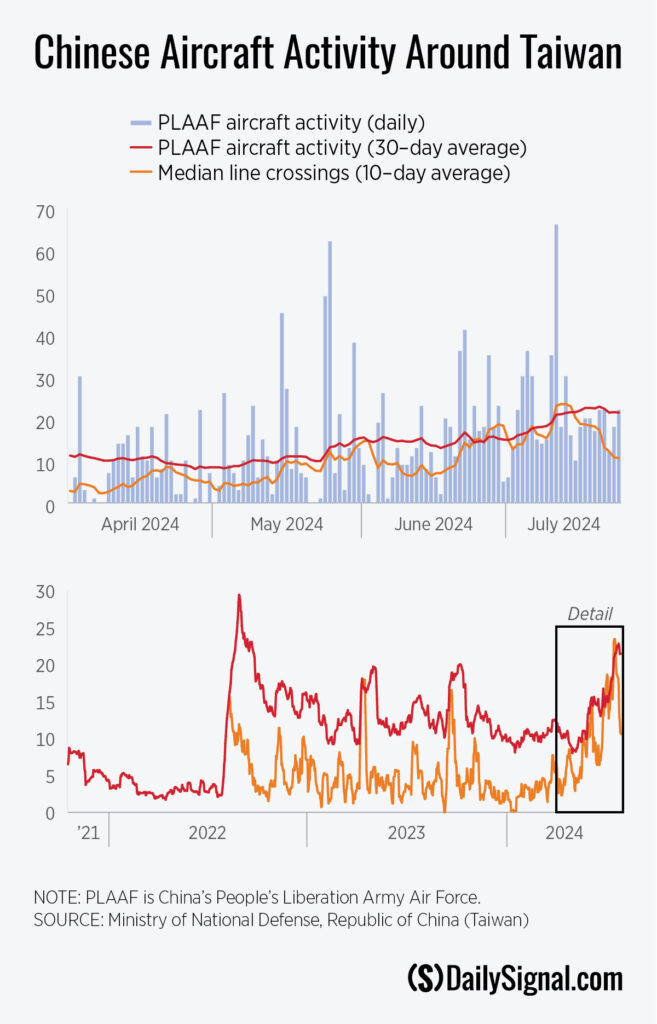
First, activity over the Taiwan Strait by China’s air force (the People’s Liberation Army Air Force) has remained at elevated levels since 2021, but recently set new records.  

On July 11, for example, 66 Chinese aircraft were detected over the Taiwan Strait, the highest single-day activity this year. Even more concerning, 56 of the aircraft crossed over Taiwan’s side of the strait, constituting the highest single-day crossing of the median line since recordkeeping began in 2020.

China’s increased military activity also led to the highest recorded 10-day average median line crossing: 23.4 aircraft. Such crossings are highly provocative. That said, activity over the past few months continues an upward trend.

The recent wave of intimidation by the Chinese air force, known as PLAAF, began soon after a July 10 meeting between the top U.S. envoy to Taiwan, Raymond Greene, and Taiwan President Lai Ching-te. Greene pledged increased measures to defend Taiwan, and his visit remains the most plausible reason for China’s response, given historical precedent.

But it’s worth noting that the Chinese escalation also coincided with NATO’s 75th-anniversary summit in Washington, which ran from July 9 through 11, where China was mentioned on multiple occasions. With surprisingly stern language, the NATO summit’s communique warns that “the stated ambitions and coercive policies [of the Chinese Communist Party] continue to challenge [NATO’s] interests, security and values.” The alliance’s communique reiterates that China cannot enable the largest war in Europe in recent history without this negatively impacting its interests and reputation.”

In all, China is mentioned 14 times in the document, demonstrating NATO’s first clear acknowledgment that transatlantic security is now deeply intertwined with issues emanating from the Indo-Pacific.

Participation by South Korea, Japan, Australia, and New Zealand in the NATO summit further signals the alliance’s deepening concern for the region and how a war there would affect European security.

In response to NATO’s statements, China’s Ministry of Defense offered stern words of its own on the same day as the communist regime’s record aircraft activity over Taiwan. China insisted NATO’s statements constitute belligerent rhetoric,” making clear that China “will firmly uphold its own sovereignty, security and development interest.” China’s dissatisfaction with the U.S.-led world order and its reach in the Indo-Pacific is well known, and that animosity is being played out increasingly in military shows of force.

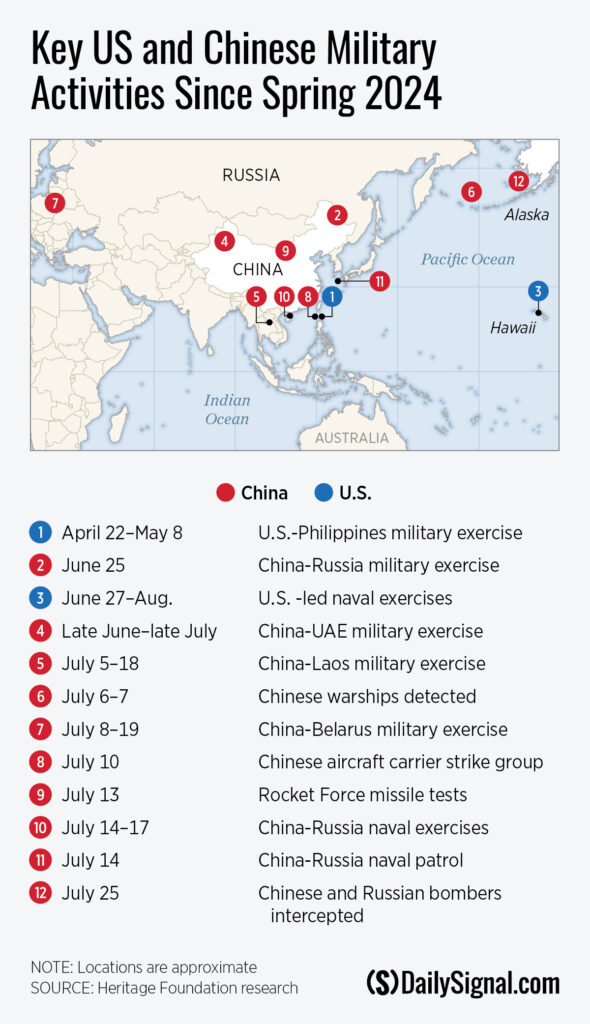
Chinese and Russian forces also gathered June 25 near the Blagoveshchensk–Heihe Bridge, which connects Russia and northeast China. According to China Military, a publication funded by the People’s Liberation Army, priorities included encirclement and capture operations” within the domains of “aerial reconnaissance, surface interception, and ambushes on the shore.”

China said the motivation for the military exercise was to combat separatism—a justification especially significant considering that China quickly labeled Lai, Taiwan’s president, a “separatist” after his May 20 inauguration.

China’s summer activity is expanding to include a variety of other military exercises. On July 13, China carried out multiple waves of missile tests in Inner Mongolia. China’s Rocket Force, responsible for the tests, likely will play a critical role in the regime’s military operations in a war over Taiwan’s future. As such, these tests also serve as preparation for a potential Taiwan war scenario and for more provocative exercises with the Chinese navy and air force during exercises expected soon in the South China Sea. If these missile tests are deemed successful by Chinese leader Xi Jinping, he may decide to execute a more complex and provocative challenge in the region.

NATO’s concern is reinforced by China’s increasingly apparent support of Russia in the ongoing Russia-Ukraine war. More directly, China and Belarus began joint exercises July 8 dubbed Eagle Assault 2024. This coincided with a visit to Warsaw by Ukrainian President Volodymyr Zelenskyy, during which Ukraine and Poland signed a security agreement. The China-Belarus military exercise took place just 17 miles from the Ukraine border and 2 miles from Poland.

Like Russia, Belarus is a member of the Shanghai Cooperation Organization, a Eurasian economic and security coalition. This partnership provides China with an impetus for a greater military presence in Europe, but how it serves China’s strategic interests is less clear. However, this military exercise, planned well in advance and coinciding with the NATO summit in Washington, certainly underscores China’s dismay with Europe’s demurring on Chinese trade and increasing realization of it as a threat.

Earlier this month, China also deepened military cooperation with the United Arab Emirates and Laos, respectively, through two exercises: Falcon Shield 2024 and Friendship Shield 2024. While noteworthy, neither exercise raised a red flag militarily. But the exercises did demonstrate China’s continued willingness to engage favorably with partners who are amenable to accepting its position on Taiwan.

In the South China Sea, a familiar hotspot, China and Russia are increasing joint military engagement, as they are elsewhere. On July 14, Joint Sea 2024 began at a naval port in Zhanjiang, southern China, headquarters for China’s South Sea fleet. Both countries conducted a variety of anti-submarine and air defense exercises.

At the same time, a separate Chinese-Russian naval patrol entered the South China Sea, passing close to Japanese islands, in what the two nations described as a routine operations unrelated to the geopolitical climate. The joint forces simulated missile firing and cross-deck landing operations and carried out gun drills. Military exercises are routinely scheduled during the summer months. But the recent activity amid regional and global tensions demonstrates an unusual increase in Beijing’s risk-taking not seen in previous years.

China also is finding ways to test the United States more directly.

Case in point: Chinese and Russian bomber aircraft were detected July 25 and intercepted by NORAD as they flew into the Alaska Air Defense Identification Zone off the coast of Alaska. This is the latest example of China and Russia’s deepening defense ties and marks the first time two U.S. adversaries deployed strategic bombers together near the United States. The Chinese aircraft in question was the H-6 bomber, capable of carrying nuclear weapons and sometimes active over the Taiwan Strait.

This latest Alaska incident came just weeks after Chinese warships were detected July 6 and 7 near Alaska’s Aleutian Islands. While steering clear of territorial waters, the Chinese vessels passed into the exclusive U.S. economic zone. This marks the fourth consecutive year that China’s naval assets have been detected near Alaska—another component of China’s upward-trending assertiveness in the Pacific.

Only days after that, the Chinese aircraft carrier Shandong, along with two missile destroyers and a frigate, made headlines as they passed close to the Philippines on the way to the Western Pacific to carry out another set of drills.

In a departure from the norm, the carrier group didn’t pass through the Bashi Channel separating Taiwan and the Philippines, but instead went through the Balintang Channel, which runs between two groupings of some of the Philippines’ northernmost islands. This diversion, while subtle, signals continued aggression toward the Philippines, where U.S. Marines recently held joint exercises.

Vietnam also has seen tension before with China in the South China Sea, but unlike the Philippines, Hanoi’s most recent Chinese-style artificial island expansion hasn’t drawn noticeable displeasure from Beijing. Since its positive diplomatic developments with both the U.S. and China last September ­and December, Vietnam has rapidly pursued island reclamation in the South China Sea. Discovery Great Reef, South Reef, Namyit Island, and Pearson Reef all received dozens of acres of land expansion since November, according to the Asia Maritime Transparency Initiative.

Barque Canada Reef continues to be Vietnam’s largest outpost and recipient of recent efforts, gaining 174 acres of land over the past six months. In all, 692 acres have been added since November. This is up from 404 acres the prior year and represents a 100% increase in land reclamation since 2022.

Manila’s seemingly minor actions prompted violent responses from Beijing and Western states’ diplomatic activities triggered military posturing, but China hasn’t condemned Vietnam’s sweeping reclamation campaign.

Why is China choosing not to back down over the Philippines while simultaneously turning a blind eye to Vietnam’s recent surge of island-building in the same region?

China’s selective enforcement of its own standards points to the likelihood that its reactions are reserved for the U.S. or actions that Beijing perceives to be prompted by or indirectly benefit the U.S.

As tensions over Taiwan and features in the South China Sea reach a boiling point, efforts to understand Beijing’s thinking are paramount and could offer ways to better address and mitigate its escalations. America’s lack of strategic direction is commensurate with China’s recent threatening actions. Beijing’s timing, location, and choice of willing partners lessen the probability that its activities happen at the same time by coincidence and hold no greater meaning.

Washington must be alert in the coming months, particularly around Thursday, Aug. 1, the anniversary of the founding of the People’s Liberation Army—a symbolic date that China often uses for strategic messaging. The United States has been in China’s crosshairs for years. But given its recent conduct, Beijing is more likely than ever to double down on its posturing and take on added risks with Washington and allies such as the Philippines.

Israel Kills a Top Hezbollah Commander in Lebanon


Wednesday, 03 July 2024 01:31 PM EDT

Read more at https://www.newsmax.com/world/globaltalk/israel-hamas-mideast-latest-07-03-2024/2024/07/03/id/1171147/

Israel killed a senior commander in the Lebanese militant group Hezbollah on Wednesday, the second top field leader killed in less than a month, and the group said it retaliated by firing scores of rockets at Israeli military positions near the border. The Israeli military estimated that around 100 rockets were fired and said there were no reports of casualties.

International diplomats are scrambling to prevent the near-daily clashes between Israel and Hezbollah from spiraling into an all-out war that could possibly lead to a direct confrontation between Israel and Iran, which is Hezbollah’s main backer. Hezbollah says it will stop its attacks once Israel agrees to a cease-fire with Hamas in the Gaza Strip.

Some Israeli officials have said they are seeking a diplomatic solution to the standoff and hope to avoid war. At the same time, they have warned that the scenes of destruction seen in Gaza will be repeated in Lebanon if war breaks out. Hezbollah, meanwhile, is far more powerful than Hamas and believed to have a vast arsenal of rockets and missiles capable of striking anywhere in Israel.

The nearly nine-month war in Gaza has caused massive devastation across the besieged territory and displaced most of its 2.3 million people, often multiple times. Israel’s military estimated Tuesday that around 1.9 million people — more than 80% of all Palestinians in the Gaza Strip — are now clustered into the territory’s central region.

Evacuees have been told by Israel to seek refuge in an overcrowded coastal area filled with sprawling tent camps where there are few basic services. Israeli restrictions, the ongoing fighting and the breakdown of law and order have curtailed humanitarian aid efforts, causing widespread hunger and sparking fears of famine. The top U.N. court has concluded there is a “plausible risk of genocide” in Gaza — a charge Israel strongly denies.

Israel launched the war in Gaza after Hamas’ Oct. 7 attack, in which militants stormed into southern Israel, killed some 1,200 people — mostly civilians — and abducted about 250. Since then, Israeli ground offensives and bombardments have killed more than 37,900 people in Gaza, according to the territory’s Health Ministry, which does not distinguish between combatants and civilians in its count.

Copyright 2024 The Associated Press. All rights reserved. This material may not be published, broadcast, rewritten or redistributed without permission.

Read more: Israel Kills a Top Hezbollah Commander in Lebanon | Newsmax.com

Hamas Ready to Negotiate Over UN Cease-Fire Plan


Tuesday, 11 June 2024 06:50 AM EDT

Read more at https://www.newsmax.com/world/globaltalk/hamas-ceasefire-terrorist/2024/06/11/id/1168248/

Hamas accepts a U.N. Security Council ceasefire resolution and is ready to negotiate over the details, senior Hamas official Sami Abu Zuhri told Reuters on Tuesday, adding that it was up to Washington to ensure that Israel abides by it.

Hamas accepts the UN security council resolution in regard to the ceasefire, withdrawal of Israeli troops and swap of hostages for detainees held by Israel, he said.

“The U.S. administration is facing a real test to carry out its commitments in compelling the occupation to immediately end the war in an implementation of the UN Security Council resolution,” Abu Zuhri said.

© 2024 Thomson/Reuters. All rights reserved.

Read more: Hamas Ready to Negotiate Over UN Cease-Fire Plan | Newsmax.com

Life Hack: If You Don’t Want To Be Killed, Don’t Take Hostages


BY: DAVID HARSANYI | JUNE 10, 2024

Read more at https://thefederalist.com/2024/06/10/life-hack-if-you-dont-want-to-be-killed-dont-take-hostages/

#FAFO

Author David Harsanyi profile

DAVID HARSANYI

VISIT ON TWITTER@DAVIDHARSANYI

MORE ARTICLES

The reaction to the rescue of four Israeli hostages from Gaza is a microcosm of the past 70 years of this conflict. Every time Palestinians pay the price for acting out in some horrific, irrational, self-destructive, violent way, their defenders want to rewind history to a more convenient moment — this time to Oct. 6, 2023.

Sorry, that’s not how life works. Hamas, the chosen political entity of Gaza — the overwhelming choice of Palestinian civilians, in fact — launched this round of the conflict by massacring, sexually torturing, and kidnapping Israelis whose only sin was attending a music festival. Palestinians took hundreds of these hostages back to the Gaza Strip — a place Arabs have political autonomy over for nearly 20 years — and held them in the middle of densely populated areas hoping to dissuade Israel from liberating them, or, if it did, to create as many martyrs as possible.

Critics of Israel now ask the usual dishonest question: Are four lives worth the alleged 200-plus Arabs that were lost rescuing them?

Israel is the only nation on earth that is tasked with protecting its own people and its enemies. Every innocent lost life is, of course, a tragedy. But if you don’t want to be placed in harm’s way, don’t hold hostages in your homes and neighborhoods, and don’t cheer and support a government that puts your life in constant danger for a lost cause. This is the reality of the world.

Now, if reports are correct, Hamas — and perhaps “civilians” (it’s difficult to tell because terrorists are often dressed as noncombatants) — opened fire on the rescuers. The Israelis, who do not indiscriminately target civilians, fired back, as they should. Whatever the specifics, every lost life is Hamas’ fault.

But, as always, it also needs to be stressed that the casualty numbers that are endlessly repeated by the establishment media are fiction — as everyone in those newsrooms is surely aware. So, we must assume outlets like The Washington Post and CNN — which also detestably contends that the hostages had been “released” — are fellow travelers. One BBC interviewer even asked an IDF spokesman if Israel had warned Palestinians of their sting operation.

Then again, even if there were over 200 dead, it is also surely the case that many of the dead were members of Hamas or holding hostages of their own volition or helping those holding hostages. Avoid doing so if you value your life.

The “Health Ministry” makes no distinction between terrorists and civilians, and in this case there might be little difference. Among those holding the Israelis hostage in their homes in Nuseirat, for instance, were a “journalist” (who apparently worked for Al Jazeera and the U.S.-based Palestine Chronicle, a 501(c)(3) nonprofit) and a “doctor.” The entire neighborhood was ostensibly under UN control. We already know that UN workers had likely participated in the Oct. 7 kidnappings and UNRWA schools are used by Hamas bases of operation.

Even now, there’s a (terrible) ceasefire deal on the table being pushed by Joe Biden (still chumming for antisemitic votes) that Hamas continues to reject. Would we not expect the United States to act the same way as Israel if some homicidal cult had our people?

In the end, of course, this could all end today if the hostages were returned and Hamas would unconditionally surrender. Israel haters, who fashion themselves peaceniks, will blame everyone — Netanyahu, Biden, colonialism, racism, etc., etc. — but the Islamists who are the cause of this war.

Then again, the entire conflict could end if the Palestinians would stop turning to nihilistic theocrats to lead them and accept Israel’s existence.  


David Harsanyi is a senior editor at The Federalist, a nationally syndicated columnist, a Happy Warrior columnist at National Review, and author of five books—the most recent, Eurotrash: Why America Must Reject the Failed Ideas of a Dying Continent. Follow him on Twitter, @davidharsanyi.

Tucker Carlson asserts ‘demonic’ forces at work, World War III ‘really close’


By Jon Brown, Christian Post Reporter Wednesday | June 05, 2024

Read more at https://www.christianpost.com/news/tucker-carlson-asserts-demonic-forces-at-work-in-world-affairs.html/

Journalist Tucker Carlson explained during a recent podcast with Shawn Ryan that he believes humanity is engulfed in a spiritual war. | Screenshot: YouTube/Shawn Ryan Show

Journalist Tucker Carlson explained during a recent podcast with former U.S. Navy SEAL Shawn Ryan that he believes humanity is engulfed in a spiritual war and that World War III could be on the horizon as the final spiritual dividing lines are being drawn.

During a wide-ranging discussion that spanned more than three hours, Carlson spoke to Ryan at length about the spiritual warfare he discerns is taking place in the world, which he believes includes UFOs or so-called “Unidentified Aerial Phenomena,” also known as UAPs.

When Ryan asked him if he believes the world is approaching World War III, Carlson said, “We’re really close to it, as you know. Really, really, really close.”

“The fact that anyone would even consider getting within a thousand miles of f—ing around with a nuclear exchange just shows you that the core impulse here is suicide,” he said. “That’s what all of this is. And that’s why I personally think it’s spiritual. The word ‘demonic’ is suddenly being overused, it’s everywhere, because it’s real.”

“If you see a human movement that’s anti-human — the push toward nuclear war for its own sake is, by definition, anti-human. I would say AI is anti-human, by definition. Transgenderism is anti-human, by definition. Transhumanism is anti-human. Do people act against their own long-term interest? Probably not, actually, so it’s probably not human.”

“Did dogs act against their own collective interest? Do caribou? Do porcupines? Do single-cell amoeba? Do sea cucumbers? No, none of them do. No animal does that, because it’s not natural. Animals are part of nature, they do natural things. People are subject to the supernatural, so they do things that are not natural, like kill themselves.”

“That’s why we’re the only species that kills itself, right?” Carlson continued. “So when you kill yourself, whether slowly or all at once, you’re being acted on by forces outside of you — spiritual forces, obviously.”

The two went on to discuss UAPs, which Carlson has previously suggested are demonic entities that have a relationship with the U.S. government.

Carlson cited Genesis 6, which some biblical commentators have suggested teaches that fallen angels and humans procreated before the Flood, according to the Encyclopedia Britannica.

Conceding that he is a devout Christian who believes other religions are false, Carlson noted that most belief systems teach that supernatural beings can take physical form, a doctrine he said would include the incarnation of Jesus Christ.

“If every culture in the world that we know about has left any kind of written or physical record is reaching the same conclusions about something, maybe there’s something there,” he said. “And maybe it’s not so crazy to think what everyone else has always thought since the beginning of time, which is that there is this combination in cases of human beings and the spiritual realm, whatever that is.”

“I don’t understand the specifics of it, but I know that it has been written about since people have been writing,” Carlson added, noting that modern man seemingly stopped believing in the supernatural largely after 1945, when they proved they were capable of destroying the world.

After Ryan observed that there is seemingly a deepening cultural divide between Christians and overt satanists that might suggest the end of the world is approaching, Carlson predicted religious revival.

“I don’t have too many great insights into things or prophetic feelings,” he said. “I’m very conventional, but the one thing that I really felt strongly a couple of years ago — really strongly, I felt it overwhelmingly like from outside me — was that there’s some form of religious revival coming. I felt that really strongly.”

Carlson said he receives reams of information about the End Times from friends. While he is reticent to formulate a firm opinion on the topic, he said he believes mankind is unmistakably moving toward a crisis point.

“I think history ends, I think we all sort of sense history ends,” he said. “But it’s also really clear that we don’t know when it ends, so I kind of resent that a little bit, because it’s like, ‘What are you? God? You know the future?'”

Acknowledging that humans are incapable of knowing the future, he also said, “We are clearly moving towards something big.”

“Who doesn’t feel that? Everybody feels it, and the divide is spiritual,” he added.

Since his ouster from Fox News in 2023, Carlson has become more open about his beliefs regarding the spiritual nature of the battles afflicting the world. During a speech to members of the Tarrant County GOP in Texas in March, he exhorted his audience to keep the country’s increasingly evident spiritual war in mind amid the approaching election.

“This is not flesh and blood at all. If you’re offended by prayer, you’re taking orders, OK? I don’t see another rational explanation for it,” he said.

“You can reduce all these debates about climate, crime, all the weird sex stuff — I’m not going to dignify it with a name, I’m just gonna call it that ‘weird sex stuff’ — but, if they’re promising you the opportunity to castrate your children, what are they really promising? No grandchildren. The end of your line,” he continued.

“And Solomon [and] David would like instantly recognize that as an act of total war against you and your people, period,” he added. “Because that’s what that is.”

Jon Brown is a reporter for The Christian Post. Send news tips to jon.brown@christianpost.com

In Blow to Biden Plan, Hamas Leader Demands Full End to Gaza War


Wednesday, 05 June 2024 03:49 PM EDT

Read more at https://www.newsmax.com/world/globaltalk/war-gaza-hamas/2024/06/05/id/1167594/

The leader of Hamas said on Wednesday the group would demand a permanent end to the war in Gaza and Israeli withdrawal as part of a ceasefire plan, dealing an apparent blow to a truce proposal touted last week by U.S. President Joe Biden. Israel, meanwhile, said there would be no halt to fighting during ceasefire talks, and launched a new assault on a central section of the Gaza Strip near the last city yet to be stormed by its tanks.

The remarks by Hamas leader Ismail Haniyeh appeared to deliver the Palestinian militant group’s reply to the proposal that Biden unveiled last week. Washington had said it was waiting to hear an answer from Hamas to what Biden described as an Israeli initiative.

“The movement and factions of the resistance will deal seriously and positively with any agreement that is based on a comprehensive ending of the aggression and the complete withdrawal and prisoners swap,” Haniyeh said.

Asked whether Haniyeh’s remarks amounted to the group’s reply to Biden, a senior Hamas official replied to a text message from Reuters with a “thumbs up” emoji.

Washington is still pressing hard to reach an agreement. CIA director William Burns met senior officials from mediators Qatar and Egypt on Wednesday in Doha to discuss the ceasefire proposal.

Since a brief week-long truce in November, all attempts to arrange a ceasefire have failed, with Hamas insisting on its demand for a permanent end to the conflict, while Israel says it is prepared to discuss only temporary pauses until the militant group is defeated.

Biden has repeatedly declared that ceasefires were close over the past several months, only for no truce to materialize. Notably, in February Biden said Israel had agreed to a ceasefire by the start of the Ramadan Muslim holy month on March 10, a deadline which passed with military operations in full swing. But last week’s announcement came with far greater fanfare from the White House, and at a time when Israeli Prime Minister Benjamin Netanyahu is under mounting domestic political pressure to chart a path to end the eight-month-old war and negotiate the release of Israeli hostages held by Hamas.

Three U.S. officials told Reuters Biden, having obtained Israel’s agreement for the proposal, had deliberately announced it without warning the Israelis he would do so, to narrow the room for Netanyahu to back away.

“We didn’t ask permission to announce the proposal,” said a senior U.S. official granted anonymity to speak freely about the negotiations. “We informed the Israelis we were going to give a speech on the situation in Gaza. We did not go into great detail about what it was.”

Hamas, who rule Gaza, precipitated the war by attacking Israeli territory on Oct. 7, killing around 1,200 people and capturing more than 250 hostages, according to Israeli tallies. Around half of the hostages were freed in the war’s only truce so far, which lasted a week in November.

Israel’s military assault on Gaza has killed more than 36,000 people, according to health officials in the territory, who say thousands more dead are feared buried under the rubble.

ISRAEL LUKEWARM

Although Biden described the ceasefire proposal as an Israeli offer, Israel’s government has been lukewarm in public. A top Netanyahu aide confirmed on Sunday Israel had made the proposal even though it was “not a good deal.” The full details have not been published, but Israel insists that it would not sign up to any proposal that requires it to halt the war before Hamas is completely destroyed. The militants, meanwhile, have shown no sign of surrender and their main leaders are still at large.

“The outline allows Israel to realize all of the objectives: to destroy Hamas militarily and its governing capabilities, to bring home our hostages, and ensure that Gaza can never form a threat to us again,” Israeli government spokesman David Mencer said on Wednesday of the ceasefire proposal.

Far-right members of Netanyahu’s government have pledged to quit if he agrees to a peace deal that leaves Hamas in place, a move that could force a new election and end the political career of Israel’s longest-serving leader. Centrist opponents who joined Netanyahu’s war cabinet in a show of unity at the outset of the conflict have also threatened to quit, saying his government has no plan.

NEW ASSAULT IN CENTRAL GAZA

Meanwhile, Defense Minister Yoav Gallant said there would be no let-up in Israel’s offensive while negotiations over the ceasefire proposal were under way.

“Any negotiations with Hamas would be conducted only under fire,” Gallant said in remarks carried by Israeli media after he flew aboard a warplane to inspect the Gaza front. Israel announced a new operation against Hamas in central Gaza on Wednesday, where Palestinian medics said airstrikes had killed dozens of people.

The armed wings of Hamas and Islamic Jihad said they had fought gun battles with Israeli forces in areas throughout the enclave and fired anti-tank rockets and shells.

“The sounds of bombardment didn’t stop all night,” said Aya, 30, a displaced woman in Deir Al-Balah, a small city in the central Gaza Strip, now the only major population center in the enclave yet to be stormed by Israeli tanks.

Two children were among the dead laid out on Wednesday in the city’s Al Aqsa Martyrs Hospital, one of the last hospitals functioning in Gaza. Mourners said the children had been killed along with their mother, who had been unable to leave when others in the neighborhood did.

“This is not war, it is destruction that words are unable to express,” said their father Abu Mohammed Abu Saif. 

© 2024 Thomson/Reuters. All rights reserved.

Read more: In Blow to Biden Plan, Hamas Leader Demands Full End to Gaza War | Newsmax.com

UN Says Only 906 Aid Truckloads Have Reached Gaza Since Rafah Operation Began


Friday, 24 May 2024 03:18 PM EDT

Read more at https://www.newsmax.com/world/globaltalk/rafah-gaza-aid/2024/05/24/id/1166089/

Aid access to the Gaza Strip is extremely limited with less than 1,000 truckloads of humanitarian assistance entering the enclave since May 7, after Israel began a military operation in southern Gaza’s Rafah area, the United Nations said on Friday. The U.N. Office for the Coordination of Humanitarian Affairs (OCHA) said that between May 7 and May 23, only 906 truckloads entered the enclave of 2.3 million people, where a famine looms amid the war between Israel and Palestinian militants Hamas. U.N. spokesperson Stephane Dujarric said about 800 of those truckloads were food supplies.

OCHA said 143 truckloads passed through the Israel-controlled Kerem Shalom crossing in Gaza’s south, while in Gaza’s north 62 passed through the Erez crossing and 604 via Erez West. It said 97 truckloads have come through a U.S.-built floating pier in central Gaza that began operating a week ago.

The Rafah crossing from Egypt into Gaza has been closed since Israel began stepping up its military operation in the area, creating a backlog of aid in Egypt where some of the food supplies have begun to rot.

Israel and the United States had called on Egypt, which is also concerned about the risk of Palestinians being displaced from Gaza, to reopen the border. Egypt had said it was closed due to the threat posed to aid work by Israel’s military operation.

On Friday, Egypt’s President Abdel Fattah al-Sisi agreed with U.S. President Joe Biden by phone to temporarily send humanitarian aid and fuel to the U.N. via the Kerem Shalom crossing, the Egyptian presidency said. Aid shipments could begin as soon as Friday evening, said Egyptian security sources, speaking on condition of anonymity.

The United Nations welcomes the move, Dujarric said. On Thursday he said: “There are a lot of doorways into Gaza. … Whether by land or by sea, we don’t control those doorways, but we want them all to be open.”

OCHA said on Friday its figures do not include commercial trucks because the U.N. has been unable to observe private-sector deliveries through Kerem Shalom crossing due to insecurity.

“Additionally, just over 1 million liters of fuel have entered the Gaza Strip since the beginning of the military operation in Rafah,” OCHA said in an update posted online.

“This represents an average of 29% of fuel allocations that would have been received under arrangements in place prior to 6 May, further affecting the functioning of bakeries, hospitals, water wells, and other critical infrastructure,” it said.

The U.N. says at least 500 trucks a day of aid and commercial goods need to enter Gaza. In April, an average of 189 trucks entered a day – the highest since the war started in October.

Israel is retaliating against Hamas, which rules Gaza, over an Oct. 7 attack by the Palestinian militants in which more than 1,200 people were killed and over 250 taken hostage, according to Israeli tallies. Nearly 130 hostages are believed to remain captive in Gaza.

Israel launched an air, ground and sea assault on the blockaded Palestinian territory, killing more than 35,000 Palestinians, according to Gaza health authorities. (Reporting by Michelle Nichols; editing by Jonathan Oatis)

© 2024 Thomson/Reuters. All rights reserved.

Read more: UN Says Only 906 Aid Truckloads Have Reached Gaza Since Rafah Operation Began | Newsmax.com

Gaza Aid Promptly Looted After Landing at US-Built Floating Pier


By: Joshua Arnold / May 23, 2024

Read more at https://www.dailysignal.com/2024/05/23/gaza-aid-promptly-looted-after-landing-at-us-built-floating-pier/

Looters steal Gaza aid delivered via a U.S.-built floating pier, raising concerns about aid to Palestinians and regional security. Pictured: This handout image shows U.S. soldiers and sailors working with Israeli troops May 16 to erect the temporary pier on the Gaza coast. (Photo: U.S. Central Command/ Getty Images)

COMMENTARY BY Joshua Arnold

Joshua Arnold is a staff writer at The Washington Stand, contributing both news and commentary from a biblical worldview.

It took far longer for Americans to build a floating pier on the Gazan coast to deliver aid for civilians caught in the Israel-Hamas war than for the aid to be looted.

President Joe Biden announced the pier project during his State of the Union address March 7. After delays, the pier was in place by May 7. However, due to “high winds and high sea swells,” as deputy Pentagon press secretary Sabrina Singh described it, no aid could be delivered immediately.

The first 10 truckloads of food aid were landed on the floating pier last Friday and were subsequently delivered to a warehouse for the U.N. World Food Programme 8 miles away. On Saturday, 16 more trucks landed with aid. However, “11 of those trucks never made it to the warehouse,” said Stéphane Dujarric, spokesman for the U.N. secretary-general. “Crowds had stopped the trucks at various points along the way.” The Associated Press reported gunfire erupting at the scene, leaving at least one man dead.

“There was, you know, what I think I would refer to as ‘self-distribution,’” Dujarric said.

In response to the looting, the U.S. military halted further aid deliveries Sunday.

Due to a lack of specific reporting, it’s not clear who was responsible for plundering the aid caravan.

U.N. officials planted the suggestion that the aid was looted by Palestinian civilians, brought to the brink of starvation by Israel’s blockade in its war with Hamas, the terrorist organization that governs the Gaza Strip and massacred some 1,200 civilians Oct. 7 in Israel. Following this lead, most media reports have attributed the “self-distribution” simply to “crowds.”

However, it would be strange if civilian crowds in Gaza had enough firearms to cause a shootout over aid. This is Gaza, not Chicago.

Since its bloody coup in 2007, Hamas has governed the territory with an iron fist, brutally eliminating any perceived threat to its control. It’s hard to believe that any Palestinian in the Gaza Strip has firearms besides Hamas and its allied terrorist groups.

Perhaps the U.S. military drew the same conclusion. Perhaps it suspected the supplies plundered from aid trucks eventually wound up in the hands of terrorists—even if the terrorists happily used crowds of hungry civilians to stop the caravan initially. Perhaps that’s why the U.S. military halted further aid deliveries.

Meanwhile, of the food aid that made it through to the U.N. warehouse, U.S. officials say they believe none has been distributed to those in need. When asked Tuesday whether aid had reached Gaza residents, Pentagon press secretary Maj. Gen. Pat Ryder responded: “I do not believe so.”

That makes two problems with the American military’s Gaza food delivery mission.

First, international and nongovernmental aid organizations on the ground aren’t effective at distributing aid to those in need. Second, once aid enters Gaza, it’s hard to prevent it from falling into the hands of nefarious actors.

Any U.S. aid delivery strategy that fails to account for these two problems is doomed to misfire. Biden promised no U.S. military “boots on the ground” in Gaza (are boots on a floating pier anchored to the ground much different?). This means the U.S. must, at some point, hand off the aid to groups already handling it so ineffectively and insecurely. When asked Tuesday “who was responsible for security” of the looted aid trucks, the U.N.’s Dujarric admitted, “There is no—we don’t have any armed security.”

The current U.S. plan to get the pier’s terminal up and running again is for the aid convoys to travel to the World Food Programme warehouse by “new routes.” This, obviously, solves none of the problems.

This new plan is likely to last only as long as it takes for the same “crowds” to ambush a convoy on its new route. If the crowd still has guns and the men in the trucks don’t, it’s hard to imagine any other outcome but more looting.

Neither problem should have surprised the Biden administration, if officials were willing to listen to America’s close friend and ally, Israel. Israel has known all along that Hamas commandeers confiscate aid shipments and that Gazan aid organizations are ineffective. As of Tuesday, Israeli border guards had outworked international aid agencies to the point that “650 truckloads [were] waiting for collection and distribution … on the Gazan side of the crossings,” according to an Israeli agency, Coordination of Government Activities in the Territories.

“Crossings” is plural because Israel worked to open a second border crossing to aid trucks May 1, after Hamas damaged the crossing in its Oct. 7 terrorist attacks in southern Israel. Meanwhile, Hamas stole the first convoy of aid to enter the Gaza Strip through the newly restored crossing under the coordination of the United Nations Relief and Works Agency for Palestine Refugees.

In February, a U.S. diplomat denied that Hamas seized any aid shipments into Gaza, but he also acknowledged that Hamas could “shape where and to whom assistance goes.” America’s difficulties delivering aid to the Gaza Strip underscore who is the villain and who is the hero in this story.

Reporting from international and mainstream media outlets would convince you that Israel is out to maximize the suffering of people in Gaza, including by starving them to death. The International Criminal Court recently issued “preposterous” indictments against Israeli leaders, “saying that Israel has starved Gazans to death,” as Eugene Kontorovich, director of the Center for Middle East and International Law at George Mason University’s Scalia Law School, said on “Washington Watch.”

“It’s not clear that anyone has starved in Gaza,” Kontorovich said. But, he added, “to the extent there’s a problem with food supplies there, it is well known that Hamas steals and plunders all the civilian, all the humanitarian supplies that are coming in. So, it’s not clear why it’s Israel rather than Hamas that is being accused of this.”

The International Criminal Court has no official jurisdiction, so it “can’t really do anything directly against Israel,” Kontorovich said. The charges nevertheless are “blood libel against the Jews,” he said, a classic example of antisemitism that will be used “in a further diplomatic campaign to delegitimize Israel.”

But the claim that Israel is trying to starve Palestinian civilians by not allowing aid into Gaza is simply false. Since the beginning of the war, Israel has allowed 19,981 truckloads of food, 1,752 truckloads of water, 4,213 truckloads of shelter equipment, 2,002 truckloads of medical supplies, and 1,784 truckloads of mixed supplies into Gaza, as well as 297 tanks of fuel and 541 tanks of cooking gas. That adds up to 572,300 tons of humanitarian aid on 29,746 trucks. (Meanwhile, Gaza’s other neighbor, Egypt, has closed its border crossing and is allowing no aid into the strip.)

Israel has done this, even though it knows much of the aid will end up in its enemy’s hands, to alleviate the suffering of Gazan civilians. The Israelis have delivered thousands of leaflets, broadcast their targets in advance, and otherwise sacrificed operational efficiency in countless ways to spare Palestinian lives. Israel has done all this, and then the international community blames it when Hamas, a terrorist organization, steals humanitarian aid from civilians and uses those civilians as human shields.

No country in the world is doing more to help the people of Gaza than the nation of Israel. Yet Biden’s decision to build a floating pier on the Gaza coast was essentially a rebuke to our ally, a declaration that Israel isn’t doing enough. It took only two days of real-world interactions for the Biden administration to discover that Gaza aid delivered through an American port of entry faces all the same barriers as aid delivered through an Israeli port of entry—none of which are Israel’s fault.

Biden’s floating pier is an inefficient, costly alternative to Israeli border crossings. U.S. officials claimed the pier initially could handle 90 trucks per day, possibly up to 150 trucks. Yet only a couple dozen trucks have left the pier since its completion two weeks ago. For comparison, 403 aid-bearing trucks entered Gaza on Monday alone, nearly all through Israel.

The floating pier involved the labor of 1,000 U.S. servicemembers and a price tag of $320 million, Reuters reported.

“The administration got what it wanted” out of the pier, speculated National Review’s senior political correspondent, Jim Geraghty, “which was a couple of ‘U.S. military starts delivering aid to Gaza through floating pier’ headlines this past weekend.”

But for the civilians of Gaza, the Biden administration has delivered next to nothing.

Originally published by The Washington Stand

Must See


May 22, 2024

IDF Striking Hamas Positions in Rafah After Cease-Fire Talks Appear to Falter Anew


By Newsmax Wires    |   Monday, 06 May 2024 03:26 PM EDT

Read more at https://www.newsmax.com/world/globaltalk/hamas-terrorists-israel/2024/05/06/id/1163647/

Israeli Defvense Forces reported on Monday that they’ve begun attacks against Hamas targets in Rafah, Gaza Strip, after the latest round of talks on a proposed cease-fire took a turn unsatisfactory to Israeli leadership. The news came after Hamas announced it had accepted an Egyptian-Qatari proposal for a cease-fire to halt the seven-month-long war with Israel in Gaza, hours after Israel ordered about 100,000 Palestinians to begin evacuating from the southern city of Rafah, signaling that a long-promised ground invasion there could be imminent.

Israel’s military spokesperson said Monday that all proposals regarding negotiations to free hostages in Gaza are examined seriously, and that in parallel it continues to operate in the Hamas-ruled territory.

“We examine every answer and response in the most seriously manner and are exhausting every possibility regarding negotiations and returning the hostages,” Rear Adm. Daniel Hagari said when asked during a media briefing whether Hamas saying it accepted a cease-fire proposal would impact a planned offensive in the Gaza city of Rafah.

“In parallel, we are still operating in the Gaza Strip and will continue to do so.”

An Israeli official says Hamas approved a “softened” Egyptian proposal that was not acceptable and not approved by Israel, which apparently keeping up airstrikes on the Rafah hideouts of Hamas terrorists, as covered live by Newsmax.

Newsmax’s John Huddy is on the ground in Israel as the sound of strikes rang in the air, reportedly from nearby Rafah.

“This would appear to be a ruse intended to make Israel look like the side refusing a deal,” said the Israeli official, who spoke on condition of anonymity.

Israel’s Channel 12 quotes Israeli officials saying Israel’s negotiating team has just received Hamas’ response from the mediators. The report says Israel is now carefully evaluating the Hamas response and will issue orderly comments later this evening.

It says the Israeli officials are already saying “this is not the same proposal” for a deal that Israel and Egypt agreed upon 10 days ago, and that served as the basis for the indirect negotiations since then.

“All kinds of clauses” have been inserted, according to the TV report.

These new clauses, among other issues, relate to the cardinal questions of if, how and when the war would end, and what kind of guarantees are being offered to that effect.

Hamas, the report noted, had been toughening its demands in recent days, and demanding  the war end during the first, 40-day phase of the deal, rather than in the second or third phases.

Israel, for its part, has repeatedly rejected ending the war as part of a hostage deal at all, instead insisting it will resume fighting once the deal is implemented, in accordance with its twin war goals: returning the hostages and destroying Hamas’s military and governance capacities.

Earlier, Hamas said in a brief statement that its chief, Ismail Haniyeh, had informed Qatari and Egyptian mediators that the group accepted their cease-fire proposal. The statement gave no details of the accord.

There has been no successful agreement on a cease-fire in Gaza since a week-long pause in the fighting in November. The Hamas announcement of an agreement came hours after Israel ordered the evacuation of parts of Rafah, the city on Gaza’s southern edge that has served as the last sanctuary for around half of Gaza’s 2.3 million residents.

In recent days, Egyptian and Hamas officials have said the cease-fire would take place in a series of stages during which Hamas would release hostages it is holding in exchange for Israeli troop pullbacks from Gaza.

It is not clear whether the deal will meet Hamas’ key demand of bringing about an end to the war and complete Israeli withdrawal.

Hamas said in a statement Haniyeh had delivered the news in a phone call with Qatar’s prime minister and Egypt’s intelligence minister. After the release of the statement, Palestinians erupted in cheers in the sprawling tent camps around Rafah, hoping the deal meant an Israeli attack had been averted.

Israel’s closest allies, including the United States, have repeatedly said Israel should not attack Rafah. The looming operation has raised global alarm over the fate of around 1.4 million Palestinians sheltering there.

Aid agencies have warned that an offensive will worsen Gaza’s humanitarian catastrophe and bring a surge of more civilian deaths in an Israeli campaign that in nearly seven months has killed 34,000 people and devastated the territory.

President Joe Biden spoke Monday with Israeli Prime Minister Benjamin Netanyahu and reiterated U.S. concerns about an invasion of Rafah. Biden said that a cease-fire with Hamas is the best way to protect the lives of Israeli hostages held in Gaza, a National Security Council spokesperson said on condition of anonymity to discuss the call before an official White House statement was released.

Hamas and key mediator Qatar said that invading Rafah will derail efforts by international mediators to broker a cease-fire. Days earlier, Hamas had been discussing a U.S.-backed proposal that reportedly raised the possibility of an end to the war and a pullout of Israeli troops in return for the release of all hostages held by the group. Israeli officials have rejected that trade-off, vowing to continue their campaign until Hamas is destroyed.

Netanyahu said Monday that seizing Rafah, which Israel says is the last significant Hamas stronghold in Gaza, was vital to ensuring the terrorists can’t rebuild their military capabilities and repeat the Oct. 7 attack on Israel that triggered the war.

Lt. Col. Nadav Shoshani, an army spokesman, said about 100,000 people were being ordered to move from parts of Rafah to a nearby Israel-declared humanitarian zone called Muwasi, a makeshift camp on the coast. He said that Israel has expanded the size of the zone and that it included tents, food, water and field hospitals.

It wasn’t immediately clear, however, if that material was already in place to accommodate the new arrivals.

Around 450,000 displaced Palestinians already are sheltering in Muwasi. The U.N. agency for Palestinian refugees, known as UNRWA, said it has been providing them with aid. But conditions are squalid, with few bathrooms or sanitation facilities in the largely rural area, forcing families to dig private latrines.

After the evacuation order announcement Monday, Palestinians in Rafah wrestled with having to uproot their extended families once again for an unknown fate, exhausted after months living in sprawling tent camps or crammed into schools or other shelters in and around the city. Few who spoke to The Associated Press wanted to risk staying.

Mohammed Jindiyah said that at the beginning of the war, he had tried to hold out in his home in northern Gaza after Israel ordered an evacuation there in October. He ended up suffering through heavy bombardment before fleeing to Rafah. He is complying with the order this time but was unsure now whether to move to Muwasi or another town in central Gaza.

“We are 12 families, and we don’t know where to go. There is no safe area in Gaza,” he said.

Sahar Abu Nahel, who fled to Rafah with 20 family members including her children and grandchildren, wiped tears from her cheeks, despairing at a new move.

“I have no money or anything. I am seriously tired, as are the children,” she said. “Maybe it’s more honorable for us to die. We are being humiliated.”

Israeli military leaflets were dropped with maps detailing a number of eastern neighborhoods of Rafah to evacuate, warning that an attack was imminent and anyone who stays “puts themselves and their family members in danger.” Text messages and radio broadcasts repeated the message.

UNRWA won’t evacuate from Rafah so it can continue to provide aid to those who stay behind, said Scott Anderson, the agency’s director in Gaza.

“We will provide aid to people wherever they choose to be,” he told the AP.

The U.N. says an attack on Rafah could disrupt the distribution of aid keeping Palestinians alive across Gaza. The Rafah crossing into Egypt, a main entry point for aid to Gaza, lies in the evacuation zone. The crossing remained open Monday after the Israeli order.

Jan Egeland, secretary-general of the Norwegian Refugee Council, condemned the “forced, unlawful” evacuation order and the idea that people should go to Muwasi.

“The area is already overstretched and devoid of vital services,” Egeland said. He said that an Israeli assault could lead to “the deadliest phase of this war.”

Israel’s bombardment and ground offensives in Gaza have killed more than 34,700 Palestinians, around two-thirds of them children and women, according to pro-Hamas Gaza health officials. The tally doesn’t distinguish between civilians and combatants. More than 80% of the population of 2.3 million have been driven from their homes, and hundreds of thousands in the north are on the brink of famine, according to the U.N.

Tensions escalated Sunday when Hamas fired rockets at Israeli troops positioned on the border with Gaza near Israel’s main crossing for delivering humanitarian aid, killing four soldiers. Israel shuttered the crossing — but Shoshani said it wouldn’t affect how much aid enters Gaza as others are working.

Meanwhile, Israeli airstrikes on Rafah killed 22 people, including children and two infants, according to a hospital.

The war was sparked by the unprecedented Oct. 7 raid into southern Israel in which Hamas and other terrorists killed around 1,200 people, mostly civilians, and abducted around 250 hostages. After exchanges during a November cease-fire, Hamas is believed to still hold about 100 Israelis captive as well the bodies of around 30 others.

The mediators over the cease-fire — the United States, Egypt and Qatar — had appeared to scramble to salvage a cease-fire deal they had been trying to push through the past week. Egypt said it was in touch with all sides Monday to “prevent the situation from … getting out of control.”

CIA Director William Burns, who had been in Cairo for talks on the deal, headed to meet the prime minister of Qatar, an official familiar with the matter said. It wasn’t clear whether a subsequent trip to Israel that had been planned would happen. The official spoke on condition of anonymity to discuss the closed-door negotiations.

In a fiery speech Sunday evening marking Israel’s Holocaust memorial day, Netanyahu rejected international pressure to halt the war, saying that “if Israel is forced to stand alone, Israel will stand alone.”

On Monday, Netanyahu accused Hamas of “torpedoing” a deal by not budging from its demand for an end to the war and a complete Israeli troop withdrawal in return for the hostages’ release, which he called “extreme.”

Information from The Associated Press, Reuters, and Newsmax’s Eric Mack contributed to this report.

© 2024 Newsmax. All rights reserved.

Jonathan Conricus to Newsmax: Israel Will ‘Roll Back Iranian Aggression’


By Theodore Bunker    |   Monday, 15 April 2024 01:59 PM EDT

Read more at https://www.newsmax.com/newsmax-tv/jonathan-conricus-israel-iran/2024/04/15/id/1161073/

Jonathan Conricus, a former spokesperson for the Israel Defense Forces, told Newsmax on Monday that Israel is formulating a comprehensive plan to “roll back Iranian aggression” following the attack by Iran over the weekend.

The IDF announced on Sunday that it had identified 300 Iranian drones and missiles and eliminated “99%” of those headed for Israel on Saturday night. The attack came in response to an alleged Israeli strike on an Iranian consulate in Syria that killed several high-ranking Iranian officials.

Conricus, now a senior fellow at the Foundation for Defense of Democracies, said on “National Report,” “An attack like this from a sovereign country against Israel is not something that can or will go unanswered or unchecked.”

He added, “Israel will retaliate. I think that what Israel is now doing is formulating a strategic plan so as not to retaliate just for the sense of retaliation, but to retaliate as part of a bigger and more expansive plan to really roll back Iranian aggression in the region.”

The chief of staff of the Iranian Armed Forces, Maj. Gen. Mohammad Bagheri announced on Sunday that the attack had concluded and there was no intention of continuing the operation.

Israeli ambassador to the United Nations Gilad Erdan on Monday called for the U.N. Security Council to “impose all possible sanctions on Iran before it’s too late.

“This attack crossed every red line, and Israel reserves the legal right to retaliate,” he said.

Iran’s ambassador to the United Nations, Amir Saeid Iravani, defended the attack to the U.N. Security Council in a meeting, saying that Iran had to “exercise its inherent right to self-defense under international law” and that the country “does not seek escalation or war in the region” and does not want a conflict with the United States.

“Israeli civilians have been living under Iranian terror for far too long,” Conricus said. “All of the terrorist organizations around us — whether it’s Hamas and Islamic Jihad in Gaza, or Hezbollah in Lebanon, or a bunch of Iranian proxies in Syria — they are all funded and equipped and armed by Iran.”

“Iran’s actions over the weekend are, in fact, also an invitation for Israel to actually change its strategy and start repaying Iran for attacking and menacing so many Israeli civilians,” he said.

About NEWSMAX TV:

NEWSMAX is the fastest-growing cable news channel in America!

  • Find Newsmax channel in your home via cable and satellite systems – More Info Here
  • Watch Newsmax+ on your home TV app or smartphone and watch it anywhere! Try it for FREE — See More Here: NewsmaxPlus.com

Theodore Bunker 

Theodore Bunker, a Newsmax writer, has more than a decade covering news, media, and politics.

Rebecca Grant Op-ed: Navy makes shocking aircraft carrier decision while China threat rises


Rebecca Grant  By Rebecca Grant Fox News | Published April 1, 2024 5:00am EDT

Read more at https://www.foxnews.com/politics/biden-says-he-didnt-do-that-when-asked-about-proclaiming-easter-as-trans-day-of-visibility

What a shock. According to the newly released budget, the Pentagon wants to slow down America’s aircraft carriers. You may be thinking: no carrier, no “Top Gun,” no “Maverick.” How we’d miss those thriller movies.  

But the facts are even worse. Delaying aircraft carriers courts disaster at a time when their deterrence value is higher than ever. The Navy has a budget plan for new aircraft carriers that can launch drones, carry lasers and face down China, but President Biden’s budget took out so much money that the whole aircraft carrier plan may fall apart.  

I can’t remember when I’ve seen such a policy and reality mismatch.  

CHINA WARNED AS PHILIPPINE PRESIDENT PROPOSES COUNTERMEASURES AGAINST BEIJING’S AGGRESSION

Moving two aircraft carriers into place was vital to bottling up Iran and protecting deployed U.S. forces after the Hamas attack on Israel. The first thing Secretary of Defense Lloyd Austin did was send the USS Gerald R. Ford from the Aegean Sea to a combat position near Lebanon. Next the USS Dwight D. Eisenhower surged from her homeport in Norfolk, Virginia, to add more firepower near the Red Sea.  

The aircraft carrier USS Gerald R. Ford was the first of the new class of carriers. But sister ships could be delayed by budget cuts. (Andrej Tarfila/SOPA Images/LightRocket via Getty Images)

The deterrence value of Navy aircraft carriers has never been higher. Don’t take my word for it. Back in December, Austin made a special trip to the USS Dwight Eisenhower, praising the action of her sailors and airmen. “Sometimes our greatest achievements are the bad things we stop from happening,” Austin told the crew. “In a moment of huge tension in the region, you all have been the linchpin of preventing a wider regional conflict.” 

Right now, the Ike is still there and the F/A-18EF Superhornet fighter planes she carries are mounting continuous air patrols, knocking down Houthi drones and missiles. At the same time, the U.S. has two carriers on operations in the Pacific making sure China’s navy and Coast Guard don’t block off vital sea lanes or encircle Taiwan. 

Deterrence in two major combat theaters is resting on these 100,000-ton ships. So, it’s astonishing that the Navy’s Fiscal Year 2025 budget just sent to Congress is going to slow down new Navy aircraft carriers by taking away shipbuilding funds for two years.  

You know what else makes me mad? China is racing to build aircraft carriers. It makes me mad to see Chinese President Xi Jinping’s admirals investing while the Pentagon backs off.  

Video

China’s newest aircraft carrier, the Fujian is bigger and a technological leap ahead for China’s navy. The Fujian started dead-load catapult testing last November. China is serious about launching aircraft carriers to compete with the Ford-class designs.  

Their aircraft carriers are still not nuclear-powered, and overall are not as capable as the Ford-class, but they can cause plenty of trouble, especially for allies. If China keeps producing the Fujian class, Chinese carriers could lock out the U.S. and allies from the Strait of Malacca to the Sea of Japan.  

So, the carrier slip is also damaging because it impacts the new carriers. Believe me, these are carriers you want the Navy to buy. The Ford class took lessons from decades of carrier operations and created a ship class with innovations and room to grow.  

Take the new launch catapults and arresting gear – the wire apparatus that catches the plane’s tailhook. Old steam catapults delivered a huge jolt to launch aircraft. Remember the grimace when Tom Cruise as Maverick and fellow naval aviators launched from the carrier in the “Top Gun” movies? That was old school. 

Two US aircraft carriers sail through the South China Sea. China has simulated attacks on US warships.
The USS Ronald Reagan (CVN 76) and USS Nimitz (CVN 68) Carrier Strike Groups steam in formation, in the South China Sea, Monday, July 6, 2020. (Mass Communication Specialist 3rd Class Jason Tarleton/U.S. Navy via AP)

The Ford’s electromagnetic catapults finesse the launch with gradually increasing power, and vary the speed for launching lighter airframes such as drones. Pilots do say it’s strange not to see the iconic steam wafting up. However, the USS Ford generated 10,396 sorties in 239 days underway with the new catapults.  

All that opens up new options. Retired Rear Adm. Michael “Nasty” Manazir (a real Top Gun pilot and aircraft carrier commander) once described the Advanced Arresting Gear for USNI News as still “a controlled crash, but relatively more softly.” Navy planes had to be heavy to withstand the “cats and traps” getting on and off the ship. With the Ford-class carrier, “you can now start to do things with aircraft design that you couldn’t do before,” Manazir said.  

CLICK HERE FOR MORE FOX NEWS OPINION

Future carriers in 2040 in a heavy electromagnetic spectrum threat environment have many more options for the types of aircraft flying off their decks. But only if the Navy buys the carriers now.  

Don’t forget the Ford-class also has more electric power generation and can one day mount laser self-defense weapons. 

China’s newest aircraft carrier, the Fujian is bigger and a technological leap ahead for China’s navy. The Fujian started dead-load catapult testing last November. China is serious about launching aircraft carriers to compete with the Ford-class designs.  

Law mandates at least 11 operational aircraft carriers and the Navy always says they’d prefer 12. (Carriers can’t all be deployed at once, due to maintenance, nuclear reactor overhaul, and training schedules.) Yet the Navy’s plan delays CVN-82 and basically, every ship afterward. Older Nimitz class carriers have to retire when their nuclear reactors age out.  

That may sound like Washington math, but it’s the beginning of a death spiral. You can imagine how complicated aircraft carrier construction is. Right now, parts of three new aircraft carriers are in the assembly drydocks at Newport News, Virginia. If the Navy hits pause on CVN-82, the shipyards and suppliers can’t catch up.  

Buying an aircraft carrier every six or seven years is not economical. Obviously. Worse, it’s probably not feasible. The precious workforce of American men and women who build carriers cannot stand around and they may drift away to other programs which have money. The Navy’s own charts show the result is a fall to 10, then nine aircraft carriers in the next decades. 

No carriers, no agile deterrence. Heck, we Americans invented the aircraft carrier and its Pacific tactics in World War II. China’s navy is already bigger than ours. The advanced aircraft carriers are key to America’s military edge that protects our way of life. This is not the moment to let China sneak ahead.  

CLICK HERE TO READ MORE FROM REBECCA GRANT

Dr. Rebecca Grant is vice president of the Lexington Institute.

Defiant Houthis Will Only Reassess Red Sea Attacks If Israeli ‘Aggression’ Stops


Tuesday, 27 February 2024 08:23 AM EST

Read more at https://www.newsmax.com/world/globaltalk/houthi-terrorist-attacks/2024/02/27/id/1155082/

Yemen’s Houthi spokesperson told Reuters on Tuesday that the group’s operations in the Red Sea, where its missiles and drones have been threatening international shipping, will only stop when Israeli “aggression” on Gaza ends and the siege is lifted.

Asked if the attacks on ships would seize if a ceasefire deal was reached for Gaza, Mohammed Abdulsalam said the situation would be reassessed if the siege ended and humanitarian aid was free to enter.

© 2024 Thomson/Reuters. All rights reserved.
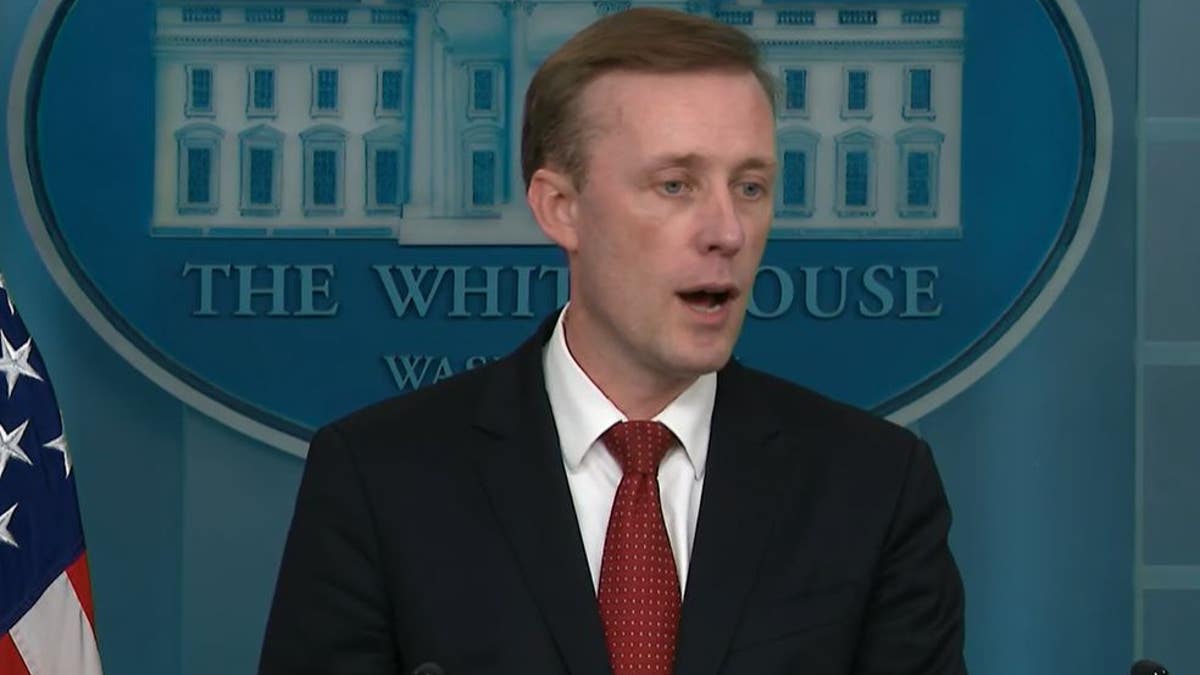
Read more: Yemen’s Houthis Say Red Sea Attacks Will Only be Reassessed If Israeli “aggression” Stops | Newsmax.com

Israeli Officials Puzzled by Biden’s Optimism on Cease-Fire Deal


By Jewish News Syndicate Staff    |   Tuesday, 27 February 2024 07:43 AM EST

Senior Israeli officials said on Tuesday that they were unaware of any basis for U.S. President Joe Biden’s remarks on Monday that a hostage-for-cease-fire agreement in Gaza is imminent. During an unannounced visit to Van Leeuwen Ice Cream in Manhattan, near Rockefeller Plaza, Biden was asked about when a cease-fire in Gaza might start.

“I hope by the end of the weekend,” Biden said, per the pool report.

“My national security adviser tells me that we’re close. We’re close. We’re not done yet,” Biden said. “My hope is by next Monday, we’ll have a cease-fire.”

Ynet quoted the senior Israeli officials as saying on Tuesday morning that they do not understand “what the American president’s optimism is based on.”

The Hamas terrorist group also weighed in on Biden’s comments, with a source telling Reuters that the statement was premature and did not align with the situation on the ground. “There are still big gaps that need to be bridged before there is a cease-fire,” he said.

A spokesman for the Qatari Foreign Ministry said on Tuesday that there has been no breakthrough in the negotiations that can be announced, while expressing that Doha is “optimistic” that a deal can be reached, even though Hamas and Israel don’t agree on any of the main issues. He added that Qatar has no intention of responding to Biden’s comments.

Reuters reported on Tuesday morning on the details of the proposal discussed at the Paris summit last weekend and submitted to Hamas for review. Citing a senior official privy to the details of the talks, the news agency reported that the proposal focuses on the first phase of the agreement, would last for 40 days and include the release of 10 Palestinian security prisoners for every Israeli hostage, which is seven more Palestinian terrorists freed per Israeli captive compared to the previous deal last November — 40 Israeli hostages in total for 400 Palestinian security prisoners in the first stage. Further, the Israeli captives include women, abductees aged 19 and under, adults aged 50 and over and sick captives.

Both sides will cease fire for 40 days and the IDF patrol flights over Gaza will stop for 8 hours a day. After the first phase, the IDF will gradually begin to withdraw its forces from dense areas of the Strip. Additionally, displaced Palestinians will gradually be allowed to return to the northern Gaza Strip, except for men of enlistment age for Hamas.

With regard to humanitarian aid, the proposal reportedly includes a commitment to bring in 500 aid trucks every day and to supply 200,000 tents and 60,000 trailers. Also, Gazans will be allowed to rehabilitate bakeries and hospitals.

According to The New York Times, the 40 captives to be released in the first phase in exchange for 15 Palestinian prisoners convicted of terror offenses would include five IDF soldiers and 35 civilians, including seven women who Israel believes should have been freed in the November deal. To release the seven women, Israel offered to release 21 Palestinian prisoners under the previous deal.Republished with permission from Jewish News Syndicate.

Read more: Israeli Officials Puzzled by Biden’s Optimism on Cease-Fire Deal | Newsmax.com

Blaine Holt to Newsmax: Israel Winning, Rejecting Biden Plan


By Eric Mack    |   Monday, 19 February 2024 10:55 AM EST

Read more at https://www.newsmax.com/newsmax-tv/blaine-holt-israel-war/2024/02/19/id/1154129/

A push by President Joe Biden’s administration for a two-state solution is falling on deaf ears because Israel is winning the war against Hamas and could end it in less than a month, retired Brig. Gen. Blaine Holt said Monday on Newsmax.

“The Israelis are winning this war right now,” Holt said on “Wake Up America.” “Even Egypt is backing off. And when you’re winning a war, you don’t tend to look at your ally and say, ‘Oh, we’ll stop fighting now.’ They’re going to victory, and then they’re going on their way to Hezbollah.”

The Israeli Defense Forces (IDF) rejected the latest Hamas calls for a cease-fire as it prepares for a final invasion of Rafah, giving the terrorists until March 10 to release the remaining hostages, which are estimated to be in the range of 100 that have yet to be confirmed dead.

“I think what the March 10 thing looks like is: We’re going to continue to prepare the battle space and take care of as many civilians as we possibly can in advance of March 10; we’ll get people diverted, replace them as we prepare for this onslaught, because this is the final push,” Holt said of the Israel position.

“This is no more than the IDF just saying we’re going to take care of civilians, and while we do, you should reconsider your position on the hostages.”

Israel has long condemned Hamas’ Oct. 7 terrorist attack and taking of hostages as human shields to use as leverage for its long-sought statehood, brought on by acts of barbaric terrorism.

“I’m not certain if Hamas has any ability whatsoever to do a thing about the hostages, whether they have control over them, whether they’re alive, and what that means, because the International Red Cross and other groups have not produced one ounce of proof of life,” Holt said. “But I think March 10 militarily means we’re going to close the curtain on this chapter of this war.”

Holt said Israel and world leaders have little fear in telling the Biden administration to stay out of their war decisions.

“Openly and on the world stage, you’ve got states now telling the United States and this administration in particular: ‘You’re not going to bully us; you’re not going to – just because you have a political problem at home with your own elections doesn’t mean you get to inflict political damage here in our country where we’ve endured horrific, barbaric attacks that are unprecedented in the modern age and that we would somehow reward the Palestinians’ – who three times by the way rejected a two-state solution, because they want a one-state solution where Israel is driven into the sea, in their words only,” Holt said.

“The administration, its academics, it’s nonpractitioners – it’s folks who know zero about warfare and geopolitics – are looking at polls here domestically with the Arab populations that they have lost for voters.

“They’ve certainly lost a lot of the Jewish vote, and they’re looking at how to fix it. And they want to fix it on the backs of [Prime Minister Benjamin] Netanyahu and the Israelis, and it’s quite sick.”

About NEWSMAX TV:

NEWSMAX is the fastest-growing cable news channel in America!

  • Find Newsmax channel in your home via cable and satellite systems – More Info Here
  • Watch Newsmax+ on your home TV app or smartphone and watch it anywhere! Try it for FREE – See More Here: NewsmaxPlus.com

Eric Mack 

Eric Mack has been a writer and editor at Newsmax since 2016. He is a 1998 Syracuse University journalism graduate and a New York Press Association award-winning writer.

Egypt Receives Hamas Response to Truce Proposal


Tuesday, 06 February 2024 04:57 PM EST

Read more at https://www.newsmax.com/world/globaltalk/hamas/2024/02/06/id/1152552/

Egyptian officials said on Tuesday they have received Hamas’ response to a framework ceasefire agreement for the Gaza Strip, a statement from Egypt’s State Information Service said.

“We will discuss all the details of the proposed framework with the concerned parties to reach an agreement on the final formula as soon as possible,” Diaa Rashwan, head of the State Information Service, was quoted as saying.

Egyptian security sources told Reuters on Tuesday that Hamas’ response showed flexibility, asking for a specific timeline for the ceasefire to end after the Muslim Eid al-Fitr holiday in early April.

“Egypt will continue to exert its utmost efforts in order to reach a ceasefire agreement in the war-ravaged Gaza Strip soon,” Rashwan said.

© 2024 Thomson/Reuters. All rights reserved.
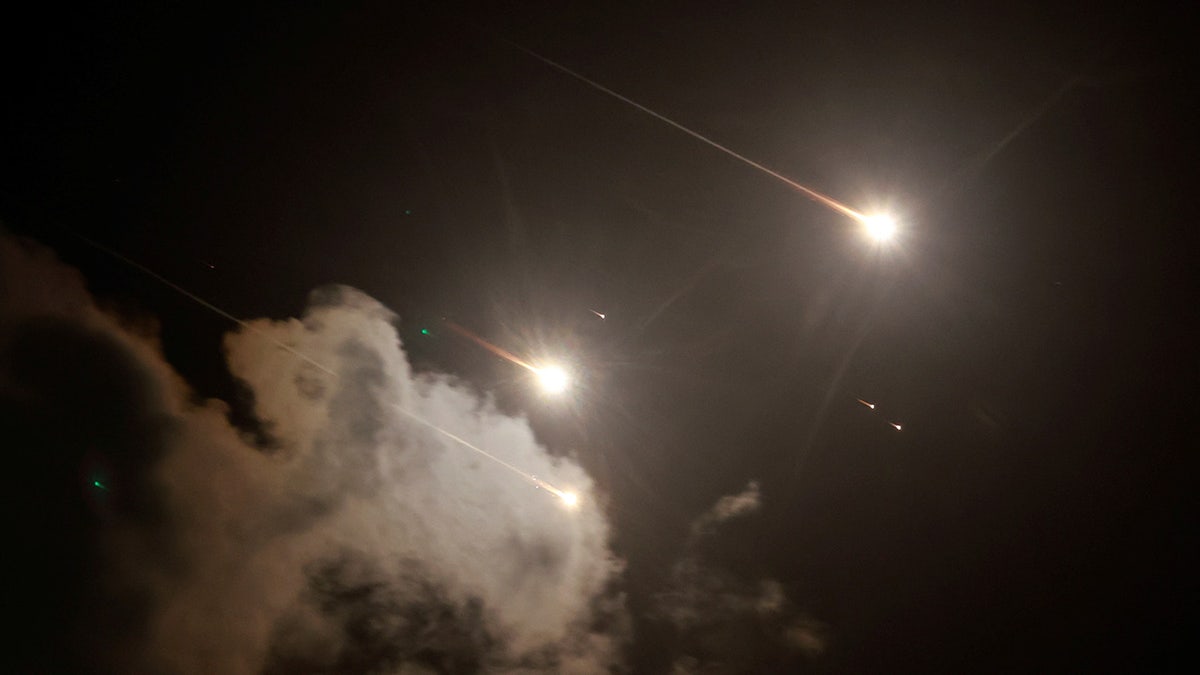
Read more: Egypt Receives Hamas Response to Truce Proposal | Newsmax.com

Deadly drone attack hits training ground at Syrian base housing US troops


By Lawrence Richard Fox News | Published February 5, 2024 8:16am EST | Updated February 5, 2024 10:42am EST

Read more at https://www.foxnews.com/world/deadly-drone-attack-hits-training-ground-syrian-base-housing-us-troops

A drone attack late Sunday evening that struck a military base in eastern Syria, where U.S. troops are stationed, left at least six allied Kurdish soldiers dead, officials said.

The attack hit a training ground at al-Omar base in Syria’s eastern province of Deir el-Zour, the U.S.-backed, Kurdish-led Syrian Democratic Forces (SDF) said in a statement Monday. According to the statement, the drone attack struck an area where the forces’ commando units were being trained.

No U.S. troops were killed or injured in the attack, they said.

The strike was the first significant attack in Syria or Iraq since the U.S. launched strikes over the weekend against Iran-backed militias. Militia fighters have been carrying out assaults on U.S. forces and civilian targets in the region since the breakout of the Israel-Hamas war in October.

HOUTHIS VOW ‘ESCALATION’ AFTER US, UK LAUNCH MORE STRIKES IN YEMEN

A parked fighter jet
This photo issued by the Ministry of Defence on Sunday, Feb. 4, 2024, shows an RAF Typhoon FGR4 aircraft returning to the base, following strikes against Houthi targets in Yemen. (AS1 Leah Jones/RAF via AP)

The SDF initially blamed “Syrian regime-backed mercenaries” for Sunday’s attack, but after investigating the attack, they accused “Iran-backed militias.”

The Islamic Resistance, an umbrella group of all Iran-backed Iraqi militias in the country, claimed responsibility for Sunday’s attack and released a video they claim showed them launching the drone used in the attack.

Map shows attacks on US forces in the Middle East since Oct. 17
A map shows there have been at least 168 attacks on U.S. forces in the Middle East since Oct. 17, 2023, as of Feb. 5, 2024. (Fox News)

Sunday’s attack came after the U.S. military carried out strikes against Houthi militant targets in Yemen over the weekend. U.S. Central Command forces said Sunday they conducted a “self-defense” strike against a Houthi land attack cruise missile at approximately 5:30 a.m. Sanaa time.

Later, at approximately 10:30 a.m., U.S. forces struck four anti-ship cruise missiles in Houthi-controlled areas of Yemen, which they determined “presented an imminent threat to U.S. Navy ships and merchant vessels” in the Red Sea.

BIDEN DEFENDS ORDER TO ATTACK IRAQ, SYRIA, USING WAR POWERS RESOLUTION AND AUTHORIZATIONS FROM 2001 AND 2002

Sunday’s strikes also came a day after the U.S. and Britain launched a wave of strikes against 36 Houthi targets, meant to degrade their capabilities.

Soldier standing next to a plane
The U.S. and Great Britain struck 36 Houthi sites in Yemen in a second wave of assaults meant to further disable Iran-backed groups that have relentlessly attacked American and international interests in the wake of the Israel-Hamas war. (AS1 Jake Green/RAF via AP)

Houthi rebels vowed “escalation” in reaction to the strikes, with a spokesman for the group vowing to continue its own attacks “no matter the sacrifices it costs us.”

“The US-British coalition’s bombing of a number of Yemeni provinces will not change our position, and we affirm that our military operations against Israel will continue until the crimes of genocide in Gaza are stopped and the siege on its residents is lifted, no matter the sacrifices it costs us,” Houthi spokesman Mohammed al-Bukhaiti wrote on X.

The Houthi spokesman also called such attacks “ineffective,” and predicted a wider war would end the U.S. presence in the region.

“If the regional war breaks out, it equals the end of US hegemony in the region,” he said.

The Islamic Resistance was responsible for the January drone attack on Tower 22 of the logistics support base in Jordan that left three U.S. service members dead and wounded 40 others.

A plane in a hangar
In addition to the strikes on Saturday, U.S. Central Command says it conducted an additional “self-defense” strike on Sunday against a Houthi anti-ship cruise missile. (AS1 Jake Green/RAF via AP)

The U.S. Defense Department identified the three deceased soldiers as Sgt. William Jerome Rivers of Carrollton, Georgia; Spc. Kennedy Ladon Sanders of Waycross, Georgia; and Spc. Breonna Alexsondria Moffett of Savannah, Georgia.

They were assigned to the 718th Engineer Company, 926th Engineer Battalion, 926th Engineer Brigade, Fort Moore, Georgia.

CLICK TO GET THE FOX NEWS APP

“I am outraged and deeply saddened by the deaths of three of our U.S. service members and the wounding of other American troops in an attack last night against U.S. and coalition forces, who were deployed to a site in northeastern Jordan near the Syrian border to work for the lasting defeat of ISIS,” Defense Secretary Lloyd Austin said after the attack. “These brave Americans and their families are in my prayers, and the entire Department of Defense mourns their loss.”

The umbrella group has launched dozens of attacks, primarily using drones, against U.S. military bases in Iraq and Syria. They have repeatedly called for American forces to withdraw from the region.

Fox News’ Anders Hagstrom, Liz Friden and The Associated Press contributed to this report.

Reports: US Begins Retaliatory Strikes, Other Actions Against Iran


Friday, 02 February 2024 04:17 PM EST

Read more at https://www.newsmax.com/world/globaltalk/iran/2024/02/02/id/1152082/

The U.S. military has begun striking targets linked to Iranian proxy groups after a drone attack killed three American soldiers in Jordan this past weekend, Newsmax and other outlets are reporting. The strike reports were confirmed to Newsmax by a U.S. official at the Pentagon, who said airstrikes were ongoing against Iran proxy groups in both Iraq and Syria.

The attacks began a little more than an hour after the conclusion of a dignified transfer ceremony honoring the three soldiers at Dover Air Force Base in Delaware Friday afternoon. That was attended by President Joe Biden. The U.S. has blamed the Islamic Resistance in Iraq umbrella group for the weekend attack that killed Sgt. William Jerome Rivers, 46, Spc. Kennedy Ladon Sanders, 24, and Spc. Breonna Alexsondria Moffett, 23, and wounded roughly 40 other American service members. With nearly a week passing between the attack and the U.S. response, critics of the Biden administration have warned that the delay has given Iranian military officials and members of Tehran-backed militia groups ample time to go into hiding.

Other actions

The reported military actions came as the United States announced terrorism and sanctions-evasion charges and seizures linked to a billion-dollar oil trafficking network that it says finances Iran’s elite Islamic Revolutionary Guard Corps (IRGC) and other militant groups.

The cases are in response to the drone strike and other aggressive actions by Iran over several years, the Department of Justice (DOJ) said. In August of 2022, for example, the U.S. charged an IRGC member with plotting to murder John Bolton, who served as U.S. national security adviser under former President Donald Trump.

Actions by Iran-backed militants, including the Oct. 7 attack on Israel by the Palestinian group Hamas and the attack over the weekend in Jordan, have increased the focus on Iran’s oil trade, the DOJ said.

“The Justice Department will continue to use every authority we have to cut off the illegal financing and enabling of Iran’s malicious activities, which have become even more evident in recent months,” U.S. Attorney General Merrick Garland said in a statement.

The DOJ seized more than $108 million that it said China Oil & Petroleum Company Limited attempted to launder through accounts at U.S. financial institutions. The DOJ said China Oil & Petroleum is an IRGC front company.

The DOJ said it also seized more than 520,000 barrels of Iran’s oil aboard the crude tanker Abyss that were covered by U.S. sanctions.

Seven defendants, including Sitki Ayan, who is a Turkish national and chairman of the ASB Group, Morteza Rostam Ghasemi, who is the son of a former IRGC commander and Iranian petroleum minister, and Behnam Shahriyari, who is an IRGC Quds Force official, were charged in the Southern District of New York federal court in connection with the seizure of the money.

The DOJ also charged a Chinese woman, Shaoyun Wang, and an Omani man Mahmood Rashid Amur Al Habsi, with Iran sanctions evasion and money laundering in connection with the trafficking and selling of Iranian oil to Chinese government-owned refineries in a case in the U.S. District Court for the District of Columbia.

Iran’s crude exports and oil output hit new highs in 2023 despite U.S. sanctions over Tehran’s nuclear program. Tehran says the program is for peaceful purposes. In January, China’s oil trade with Iran stalled as Tehran withheld shipments and demanded higher prices from its top client, tightening cheap supply for the world’s biggest crude importer. Iranian oil makes up some 10% of China’s crude imports.

Newsmax contributed to this report.

© 2024 Thomson/Reuters. All rights reserved.

Read more: Reports: US Begins Retaliatory Strikes, Other Actions Against Iran | Newsmax.com

Tag Cloud